Your GNPS newsletter. May not display properly in Microsoft outlook.
If you're having trouble viewing this email, you can see it online.
January 2024 — Volume XXX, Number 1 — Published by the Georgia Native Plant Society
2024 Plant of the Year: Blue Mistflower
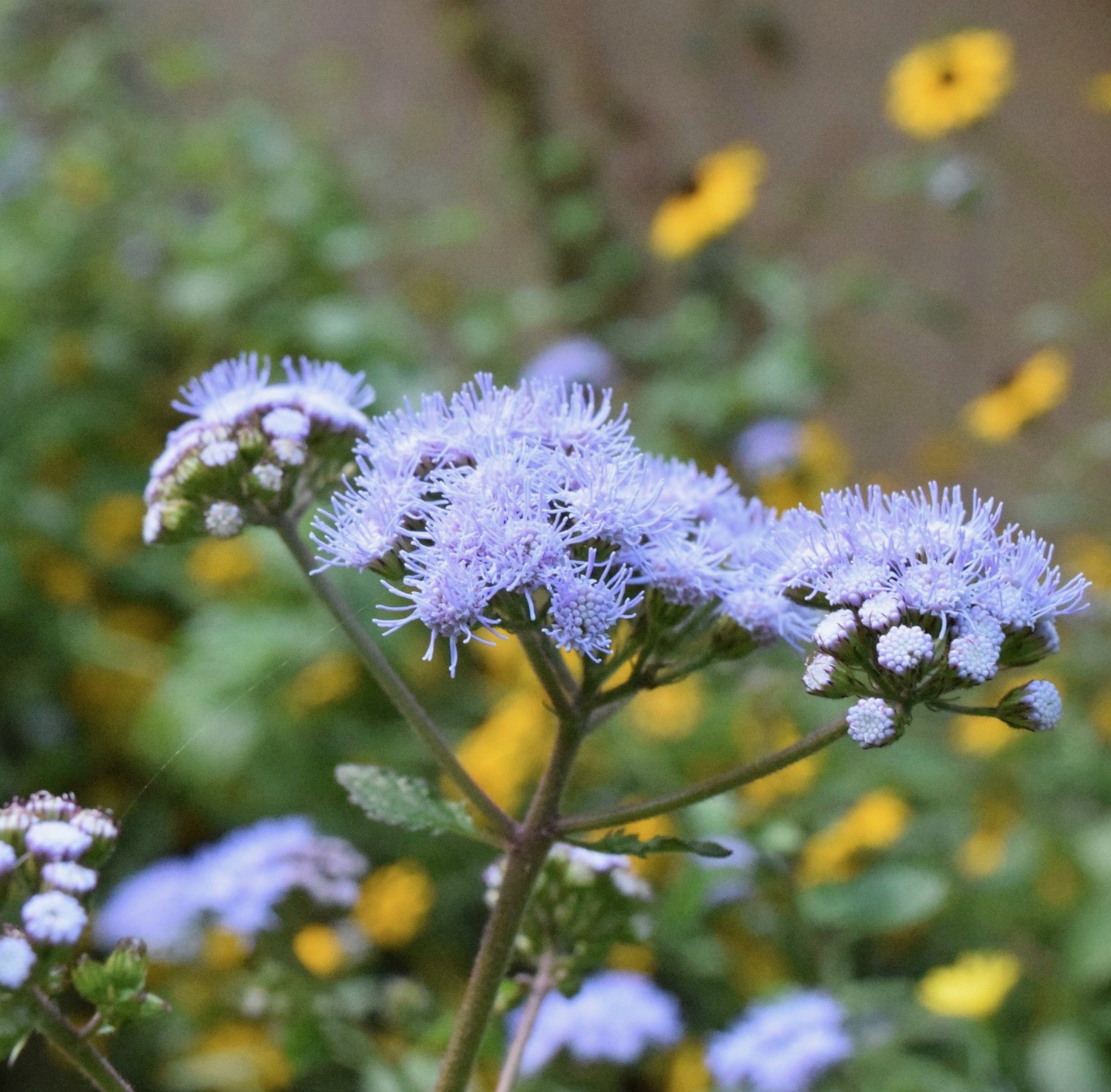
Blue mistflower’s celestial color. Photo by Ellen Honeycutt.
The GNPS 2024 Plant of the Year is blue mistflower (Conoclinium coelestinum), a native perennial wildflower with beautiful blue or purplish blossoms. A member of the Asteraceae family, the species can be found throughout the eastern U.S. and parts of Canada in wet bottomlands, ditches, and other areas with plentiful sun and moisture.
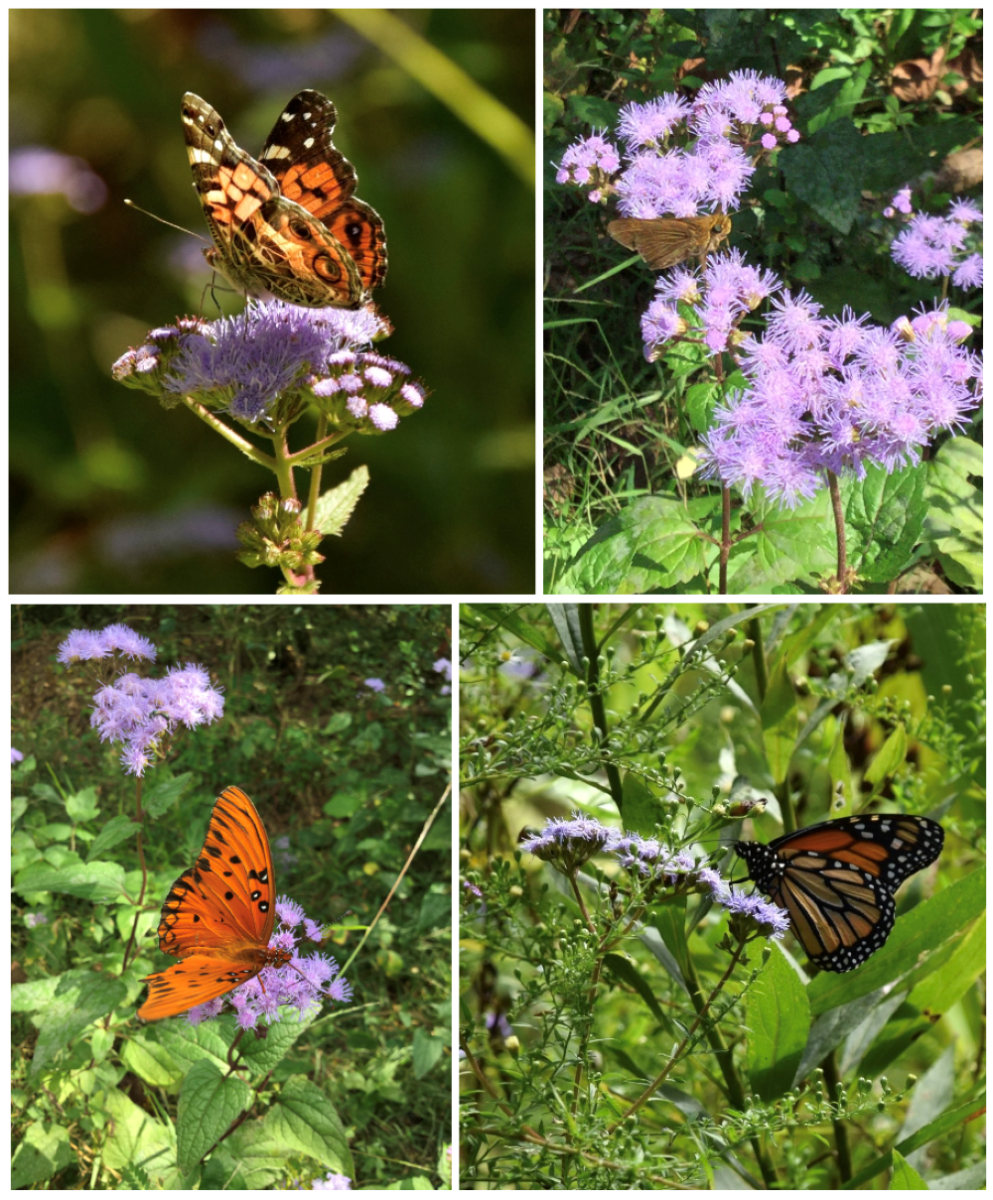
The species name for blue mistflower, “coelestinum,” means celestial or heavenly, in reference to blooms the colors of the sky. From late summer through autumn, numerous (up to 70) fluffy disc flowers, each about ½ inch across, form terminal, flat-topped clusters — landing pads for nectar-loving insects. Butterflies of many species create eye-catching splashes of brown, yellow, and orange against the blossoms’ blue/purple backdrop. Blue mistflower’s nectar also attracts bees, and the plant serves as both a nectar source and host species for several types of moths.
The genus name for blue mistflower has vacillated over the years. In 1753, Linnaeus assigned it to the genus Eupatorium, along with thoroughworts and bonesets, and blue mistflower is still referred to occasionally as blue boneset. In 1836, A.P. de Candolle suggested a new genus name, Conoclinium, derived from the Greek for “little bed”, in reference to the shape of the flower receptacle. However, most botanists continued to use Eupatorium. When modern genetic analyses supported a separate genus for blue mistflower, the name Conoclinium was resurrected.
Many butterflies, including painted ladies (A, top left), skippers (B, top right), fritillaries (C, bottom left) and monarchs (D, bottom right), feed on blue mistflower’s nectar. Photos by Ellen Honeycutt (A, D) and Valerie Boss (B, C).
Blue mistflower is also known as wild ageratum or hardy ageratum. Its flowers strongly resemble those of floss flower (Ageratum houstonianum), an annual garden plant native to Central America. Perhaps the easiest way to distinguish these look-alike species is by their mature leaves. The leaves of A. houstonianum are less than 1” long and spade-shaped, with green veins and scalloped edges. The leaves of C. coelestinum are 1-3” long and ovate-to-triangular shaped, with toothed edges. Leaf veins closest to the stem often have a reddish or purple tint, as do the stems themselves.
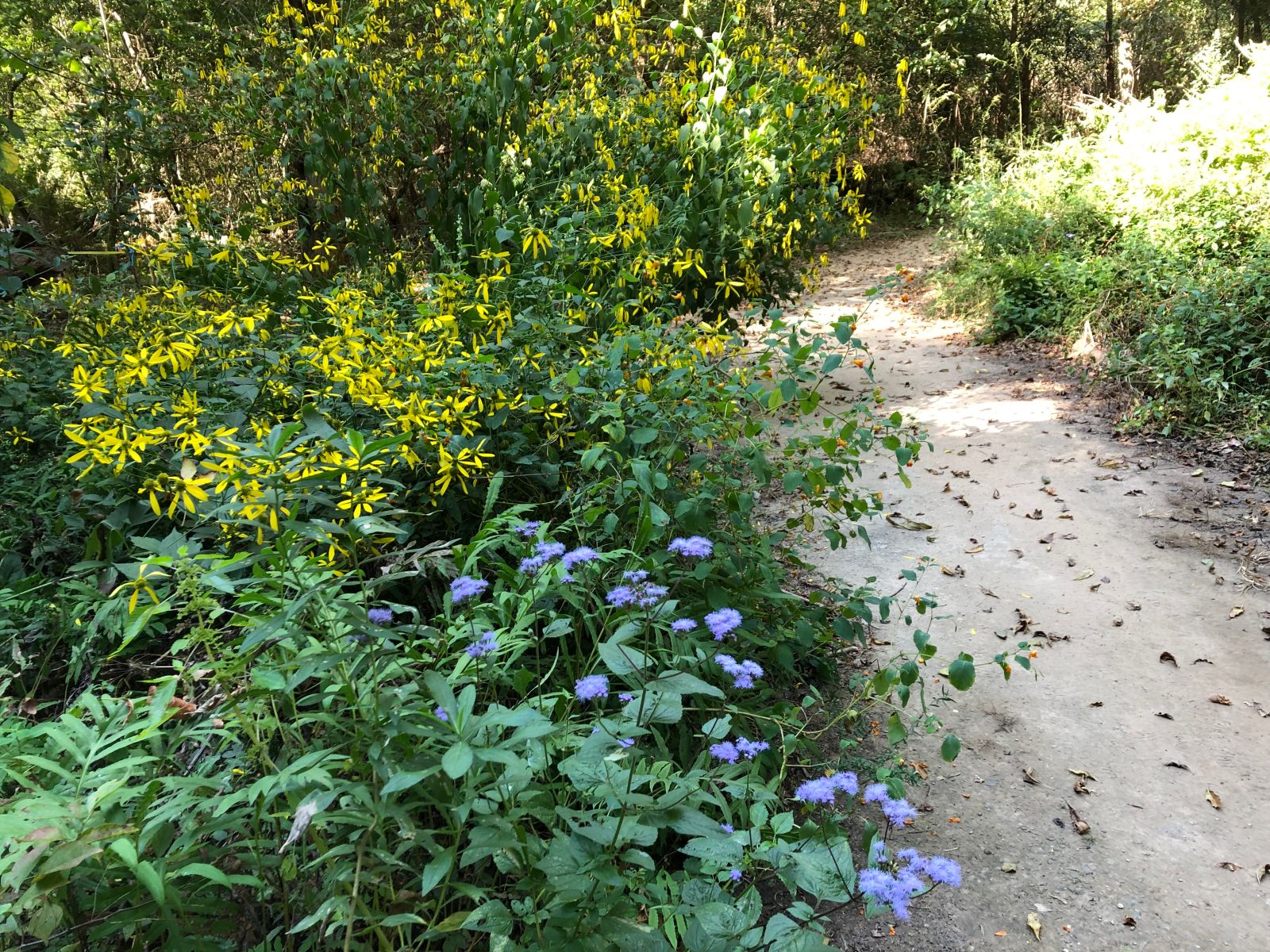
As a garden plant, blue mistflower is a fine choice for perennial borders, wetland restoration sites, and moist meadows, where it has room to spread. It makes a wonderful medium-height ground cover. It will grow to 1-3’ wide, with plentiful branching, and up to 3’ tall. In gardens where a shorter plant is preferred, it can be given the “Chelsea chop” (cutting the top 1/3 off) in summer before flower buds appear and will bloom on shortened stems. Blue mistflower grows naturally in full-to-partial sun and heavy, rich earth, although it can thrive in many soil types. Optimally, it prefers moist areas, but can handle moderately dry conditions. The species propagates easily by rhizomes, cuttings, or seeds. It spreads naturally into large swathes, particularly in disturbed ground, and has a tendency to seed itself around the garden. To control reseeding, the seed heads should be cut before they mature. Blue mistflower pairs beautifully with yellow-flowered species. Patches of it look glorious backed by cutleaf coneflower, tall goldenrods, or sunflowers.
Blue mistflower pairs with cutleaf coneflower in an herbaceous border. Photo by Valerie Boss.
2023 Year End Summary
What an exciting year it has been for the Georgia Native Plant Society! While GNPS continues to grow its signature programs, develop key partnerships and provide centralized support to our chapter network, our eight affiliated chapters have been working on the ground to build participation and effect change in their communities. Click on this 2023 infographic to see a summary of our collective impact. Some additional highlights worth noting:
We ended the year with 1,795 memberships, a 14% increase over the beginning of 2023.
There are now eight fully-fledged chapters of GNPS. A new chapter in Savannah is coming together — if you’re interested in learning more about an upcoming interest meeting, contact membership@gnps.org.
All chapters supported work days for planting or invasive species removal, either on a GNPS restoration site or a partnered project.
Partnerships and collaborative work is on the uptick. This year, chapters hosted eight Great Southeast Pollinator Census events. GNPS partnered with Birds Georgia (formerly Georgia Audubon) and Georgia Grasslands Initiative on educational programming and conservation initiatives.
We hired our first executive director in June, adding some much needed day-to-day support to our operations and strategic growth.
The impact that GNPS has throughout Georgia goes beyond this snapshot. Every new member, partner and neighbor we include in our work amplifies change towards a better landscape — plant by plant, person by person. You, our members, are the reason we exist. We thank you for your support in 2023 and hope that you will continue to be with us through 2024.
State Board
Thank you to all who voted in our election of the 2024 board of directors. The following new board members are joining in 2024: Michael Cowan (Dunwoody), Susan Malone (Macon) and Sally Phipps (Decatur). This brings the state board up to 14 members. If you missed the election email, you can read the biographical profiles of these new board members by clicking here.
Onward together in 2024
So much has been accomplished, and so much more can be done. We encourage you to get more active in your chapter; fresh ideas and perspectives are essential to moving forward while the experience of longtime members helps our new ones grow. We’d love to have chapters in new areas of the state, too: Rome, Cartersville, Columbus, Albany, and Cumming are just some of the areas that could use folks willing to start a new chapter. (If you are interested in helping to start a chapter, please email us at membership@gnps.org.) We need everyone to help us grow more people who love native plants so we can grow a better landscape in Georgia.
Invasive Species Management (Part 1): Prevention
Heather Brasell
Managing non-native invasive plant species is one of the biggest challenges when we work in conservation and restoration. This is the first of three articles on this topic. Other articles will address using mechanical and chemical methods to treat invasive plants.
I spend a lot of time and effort in the woods managing an increasing number of invasive plant species and evaluating my management goals and methods. As I worked in the woods during the COVID era, I reflected on the botanical pandemics, epidemics, and invasions that surround us. It seems to me that the difference between them is really just one of impacts on different scales. Pandemics are global infections of pathogens invading individual organisms. Epidemics are similar events on a more limited geographic range. Invasions usually apply to non-native species invading an ecosystem. (continued...)
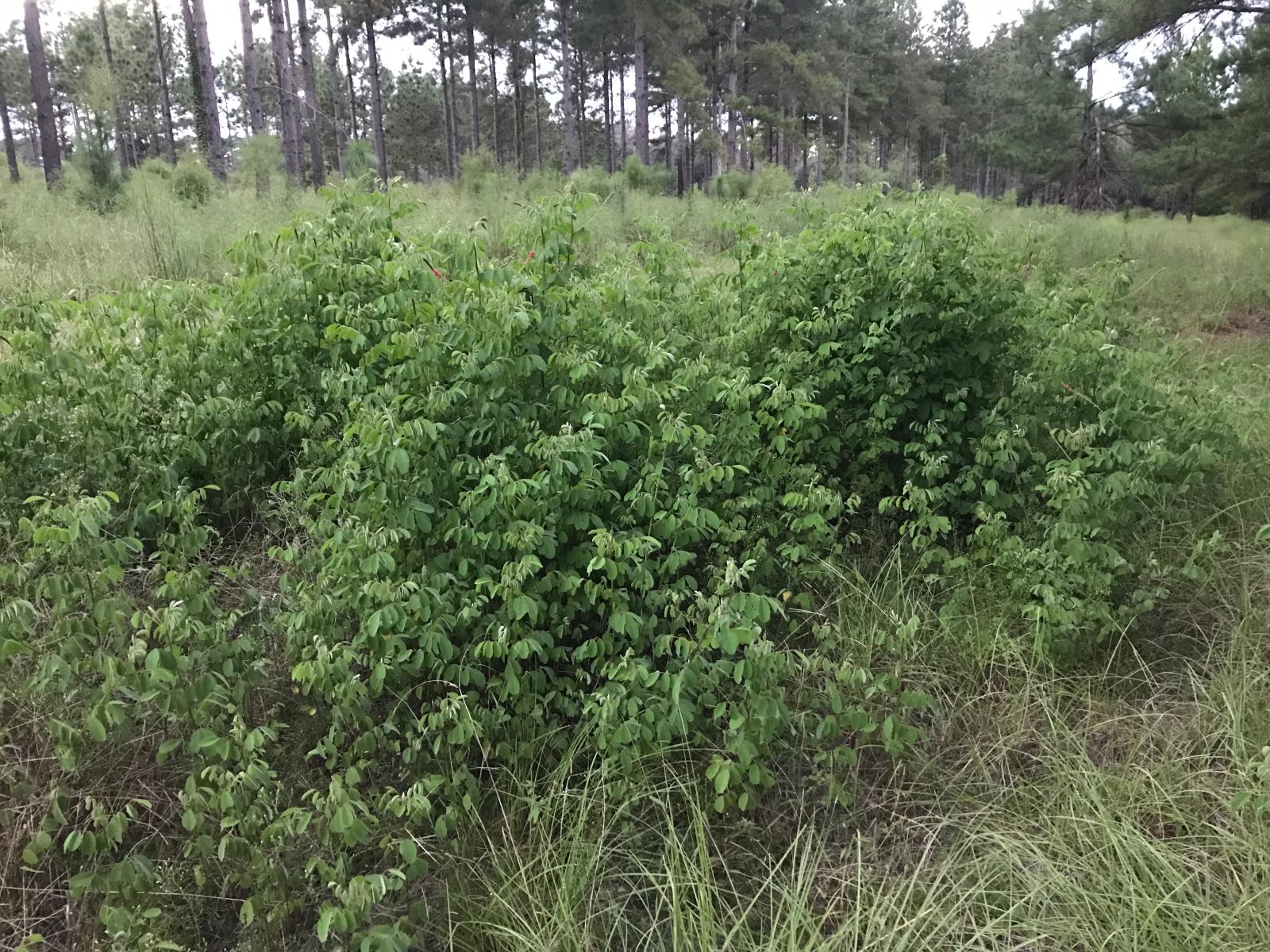
Infestations of hairy indigo (Indigofera hirsuta) reduce survival of longleaf pine seedlings.
Plant Spotlight: Still Got Leaves? Tardily Deciduous and Marcescence
Ellen Honeycutt
I’m all for evergreen plants but the fall color of deciduous plants is truly something special in the right conditions. If you’d like to have more fall color in your garden, see some of the ideas I proposed in our November 2020 spotlight. Yet not all deciduous plants lose their leaves right away. Some of them take most of winter to let go.
There are two terms that you might want to know for the plants that hold onto their leaves. Some plants are tardily deciduous and some of them exhibit marcescence (pronounced mar-CESS-sense). I’ll discuss each one briefly and then give some examples of native Georgia trees and shrubs that hang onto some leaves.
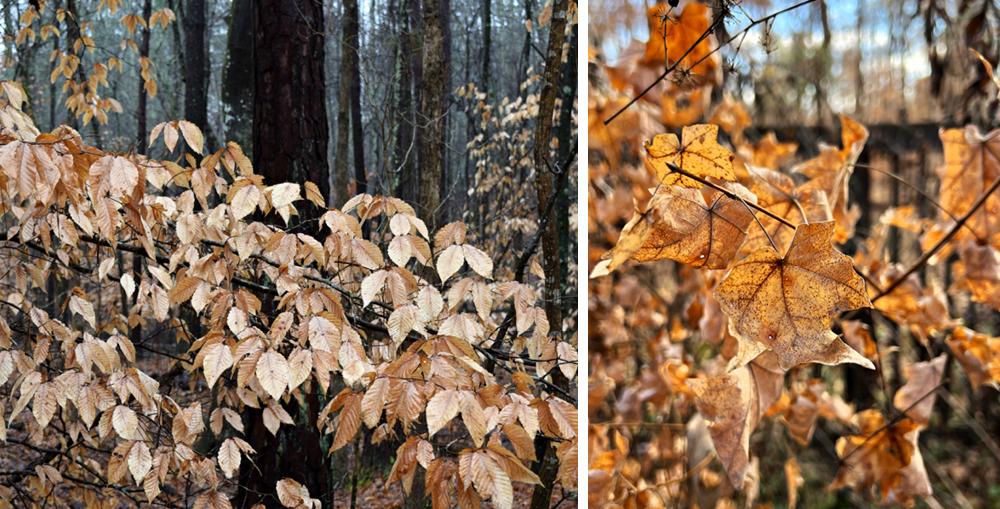
Marcescence is defined as “the withering and persistence of plant organs that normally are shed” so you’ll recognize this by the presence of dead leaves that remain on the plant. American beech (Fagus grandifolia) is perhaps one of the most recognizable plants with marcescent leaves. Other plants that might exhibit this include white oak (Quercus alba), American hornbeam (Carpinus caroliniana), hop hornbeam (Ostrya virginiana), and chalkbark maple (Acer leucoderme).
Left: American beech (Fagus grandifolia). Right: Chalkbark maple (Acer leucoderme).
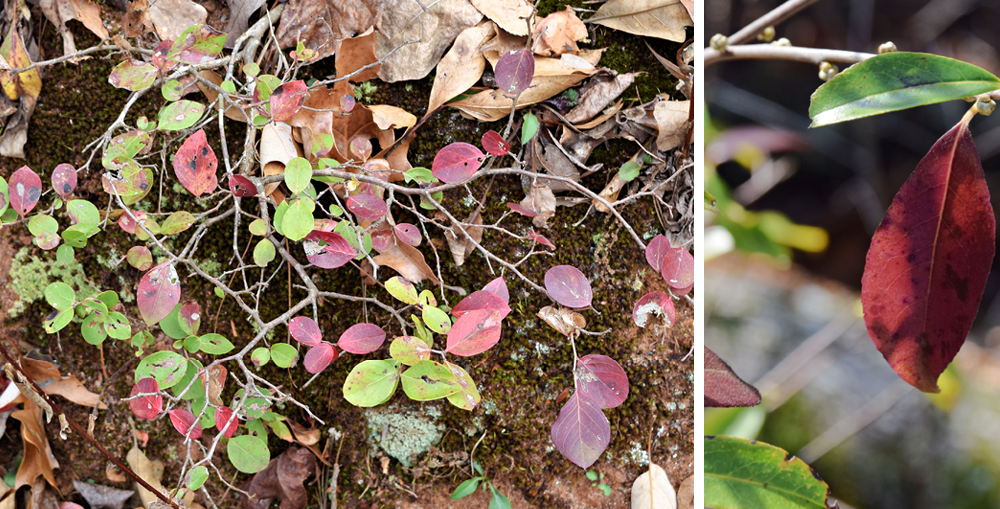
Plants that are tardily deciduous hold onto a few leaves that are not withered; the leaves usually change color at least a little bit to signal that they are truly deciduous. In my area (North Atlanta metro), this includes plants like water oak (Quercus nigra), sparkleberry (Vaccinium arboreum), horse sugar (Symplocos tinctoria), climbing hydrangea (Hydrangea barbara), and oakleaf hydrangea (Hydrangea quercifolia). I noticed this past winter that when we reached 5 degrees, the oakleaf hydrangea dropped every single remaining leaf; perhaps milder temperatures will affect how much of this that we see.
A south Georgia plant that you might not realize is tardily deciduous is live oak (Quercus virginiana), our state tree. It drops leaves in spring just before the new ones emerge. Sweetbay magnolia (Magnolia virginiana) is similar.
I hope learning these terms helps you appreciate some of the natural world we see during the winter months. Entertain your family and friends on your winter hikes by telling them about plants that exhibit these behaviors that you see along the way. Did you know you could read more plant spotlight articles on our website? Here’s the link!
Statewide Opportunities
Join in the Weed Wrangle on January 15th!
GNPS will host our first ever statewide "Weed Wrangle" on January 15th, MLK Jr. Day of Service. Weed Wrangle is a one-day, area-wide, volunteer effort to help rescue our public parks and green spaces from non-native invasive species through hands-on removal of especially harmful trees, vines and flowering plants. While many of us work regularly at invasive plant removal, we hope to promote participation, awareness and camaraderie during this national day of community service. Participating locations include:
Coastal Plain Chapter - Ga. Museum of Agriculture Nature Trail in Tifton
Fringed Campion Chapter - (TBD) Amerson River Park in Macon or Selma Erwin Nature Preserve in Milledgeville
Intown Atlanta Chapter - Mary Scott Nature Preserve in Dekalb county, Herbert Taylor and Daniel Johnson Park in Atlanta, W.D. Thomson Park in Dekalb county, Orme Park in Atlanta, and Arabia Mountain in Stonecrest.
North Metro Atlanta Chapter - Old Rucker Park in Alpharetta
West Georgia Chapter - Buffalo Creek Trail in Carrollton
Look for information on individual events from each GNPS chapter. We hope you’ll participate and bring along your friends and family too!
Information Sought on Eco-friendly Practices on Faith-owned Land
Leanna DeJong, a Quinney Doctoral Fellow in the Department of Environment and Society at Utah State University, is researching how faith communities contribute to biodiversity conservation through managing faith-owned land as habitat. As part of her research, she is crowd-sourcing a list of worship centers in the U.S. of any faith background (mosques, churches, temples, synagogues, etc.) where ecologically friendly land management of some kind is occurring (namely, but not limited, to landscaping with native plants). If you know of any worship centers in your community that qualify, please let Leanna know through this Google form.
Mark Your Calendar for the GNPS Annual Symposium on February 24-25
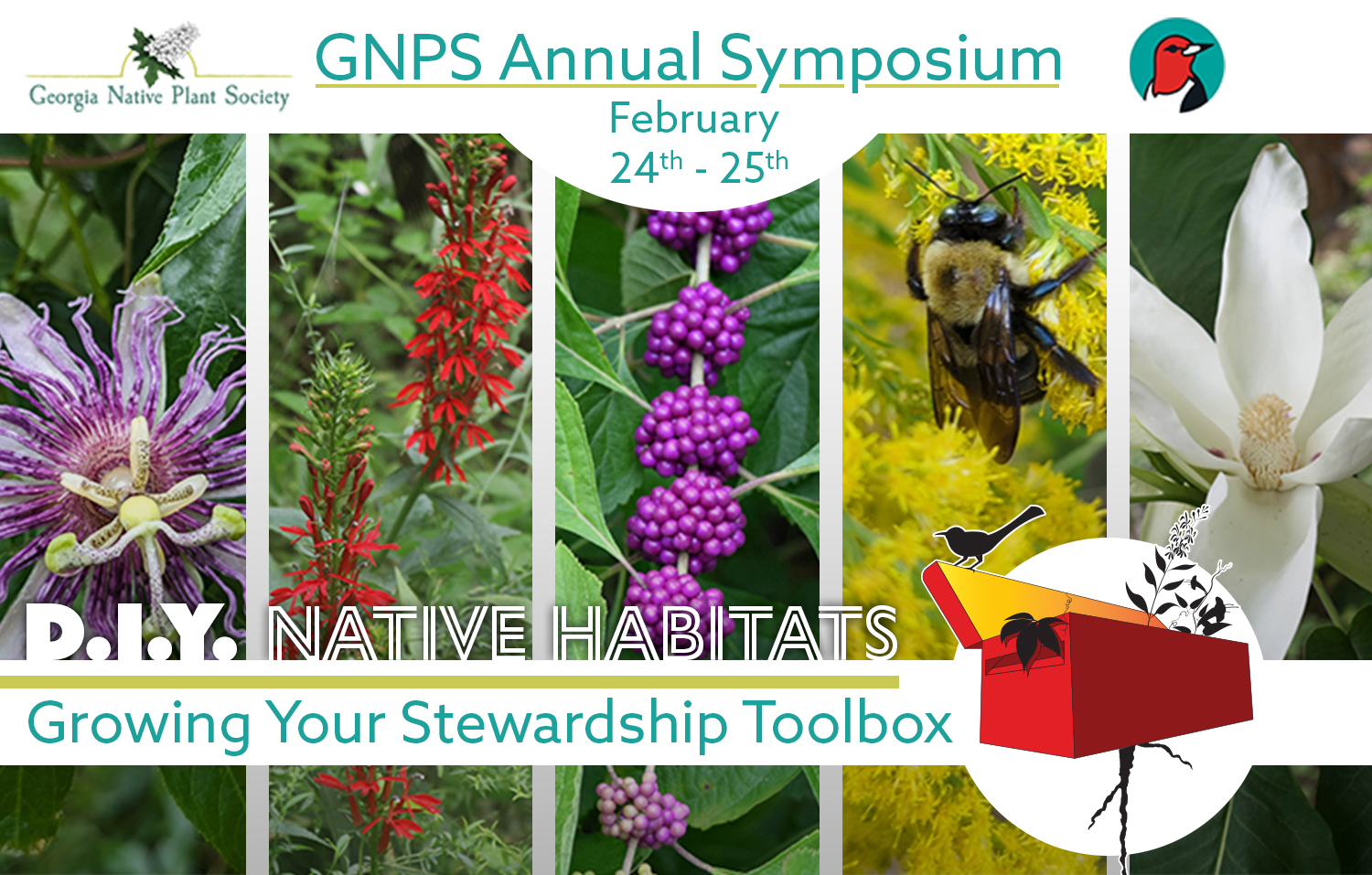
Save the date! The Annual Symposium will be Saturday and Sunday, February 24-25. This year’s theme is D.I.Y. Native Habitats: Growing Your Stewardship Toolkit. Topics will include how to get the right plants, how to approach plant identification, understanding plant communities, native plant habitat restoration, and updates from both the chapters and state. This will be a virtual event co hosted with Birds Georgia (formerly Georgia Audubon).
Chapter Updates
Coastal Plain
Weed Wrangle in Tifton on MLK Jr. Day of Service
On Monday, January 15, Martin Luther King Jr. Day, the Coastal Plain Chapter will co-sponsor a Weed Wrangle event at the Ga. Museum of Agriculture Nature Trail located at 1392 Whiddon Mill Rd., Tifton, starting at 9:00 a.m. This will be the third Weed Wrangle event held at this site in the past twelve months. The trail has been taken over by exotic species including camphortrees, Japanese climbing fern and coral ardisia.
The lead organizer is Triston Hansford of UGA Bugwood Center for Invasive Species along with Heather Brasell, the CPC GNPS liaison. Volunteers should bring water, gloves and tools, if possible. Some tools will be provided. Volunteers of any age or experience are welcome. Contact Heather at heather.brasell@gmail.com for details.
Fringed Campion
Chapter President Receives Regional Award
Carol Bokros, president of our chapter, received the President's Award for Conservation Advocacy from Ocmulgee Audubon Society at their November meeting, in part for her work on the Amerson River Park Garden in Macon.
Propagation by Germination Workshop, January 13
Join us at Juniper Creek Natives in Byron, GA from 1 p.m. to 4 p.m. for a hands-on germination workshop taught by Greg Lewis and Whit Kirkland.
How to Design and Install Drip and Mist Irrigation Systems, February 10
Join us at Juniper Creek Natives in Byron, Ga from 1 p.m. to 3 p.m. for a hands-on irrigation workshop taught by Whit Kirkland.
Attendance is limited for both workshops. Look for more information and links to sign up at our Facebook page.
Intown Atlanta
A Year in Native Gardening, January 20
Bring your calendars and join us at the Tucker-Reid H. Cofer Library (5234 Lavista Rd. in Tucker) from 2 - 4 p.m. for this workshop jam-packed with information to make your native gardening efforts productive and rewarding. Our panelists will present information that will help you create a garden that has visual interest year round. We'll also cover when to tackle garden tasks, like sowing, planting, and removing invasives, for the best impact. We'll wrap it up by sharing helpful resources and the “can't miss” events related to native gardening throughout the year. We'll leave plenty of time for our panel of experts to answer your questions. Register here.
Intown Atlanta Chapter Advocacy Committee Meeting, January 10
Join the Intown Atlanta Chapter Advocacy Committee's first meeting of 2024 on Wednesday, January 10 from 6-7 p.m. During this virtual event, committee members will discuss upcoming actions and key issue areas for increasing public awareness around native plants and the GNPS mission. Join at this Google meet link. Members who are interested or have questions can contact Sally Phipps at sallypbkk@gmail.com.
Weed Wrangles Around Atlanta on MLK Jr. Day of Service
The Weed Wrangle will be hosted at five Intown Atlanta locations on Monday, January 15:
Mary Scott Nature Preserve (41500 Briarcliff Rd. NE, Atlanta) from 11 a.m. to 2 p.m. Meet at the kiosk in the main parking lot.
Herbert Taylor and Daniel Johnson Park (343 Pasadena Ave. NE, Atlanta) from 9 a.m. to 12 p.m. Meet at the kiosk. Easy street parking available.
W.D. Thomson Park (1760 Mason Mill Rd., Decatur) from 2 to 5 p.m. Meet in the lower parking area.
Orme Park (774 Brookridge Dr., Atlanta) from 10 a.m.to 12 p.m. Meet at the main park sign.
Arabia Mountain (3350 Klondike Rd., Stonecrest) from 10 a.m. to 1 p.m. Meet at the ranger station.
North Georgia Mountains
Satterfield Connect to Protect Garden
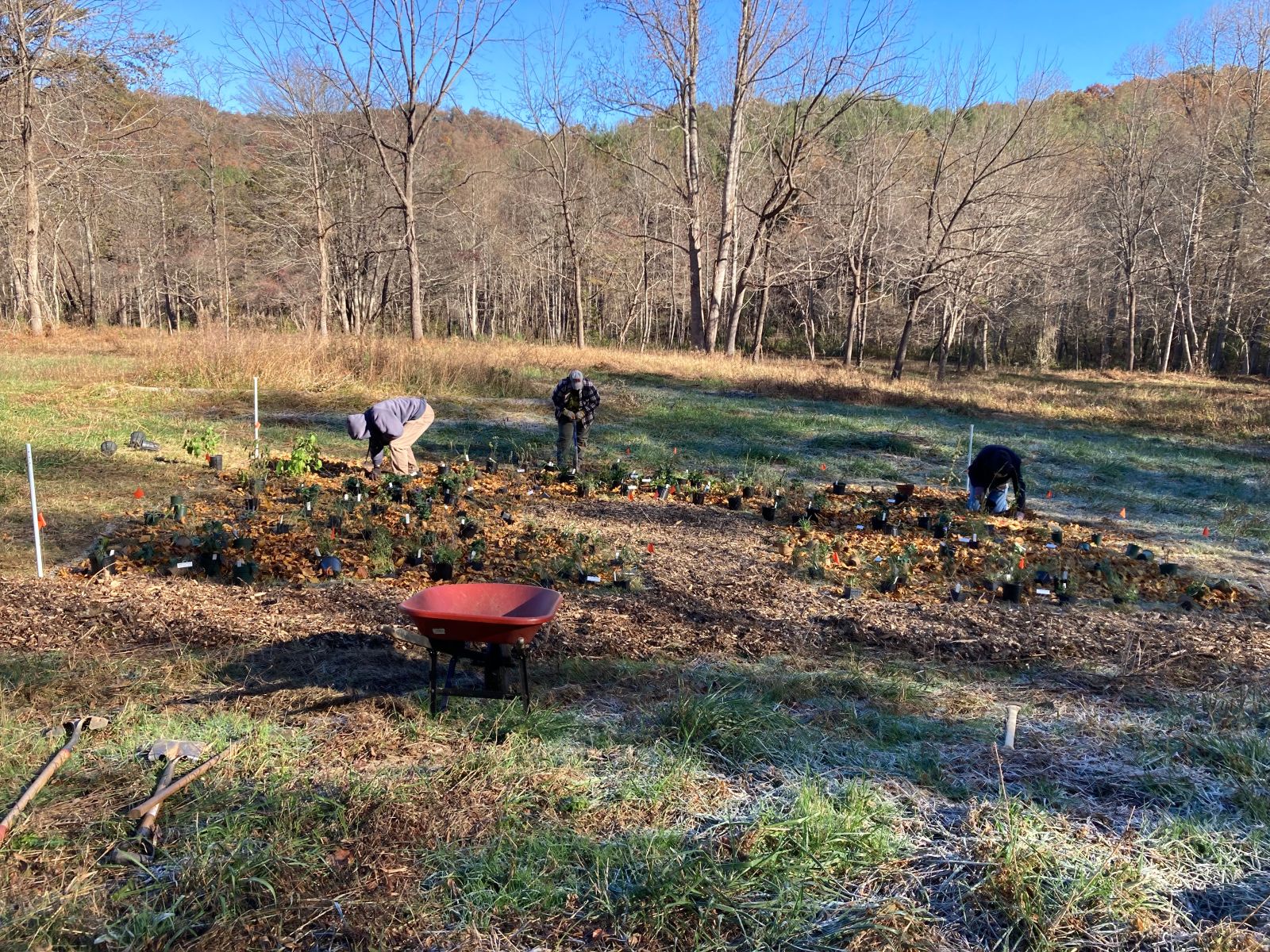
In November, the initial installation of the Satterfield Connect to Protect Garden, just east of Blairsville at the Beasley Knob OHV trailhead, was completed. This is an ongoing cooperative project between our chapter, the U.S. Forestry Service, Towns/Union County Master Gardeners, and the Southeastern Grasslands Initiative. Plants were provided by the UGA State Botanical Garden. Next steps for the project include installation of a boundary fence and a storage space to retain mulch, donated by Young Harris College, for the pathways.
Planting day at Satterfield Garden.
First Meeting of the Year, January 13
Our January meeting presentation will be on the topic of various ways to prepare plant stock for our June plant sale, including seeding and cutting propagation. Come prepared for a seed swap as well!
North Metro Atlanta
Weed Wrangle in Alpharetta on MLK Jr. Day of Service
The North Metro Chapter is hosting a Weed Wrangle at the Old Rucker Park in Alpharetta. Sign up here.
Wild Edible Plants of Southern Appalachia, February 17
Join us for an educational event, Wild Edible Plants of Southern Appalachia, at the Alpharetta Library on February 17 featuring speaker, Mark Warren. Mark, owner of the nationally renowned Medicine Bow Wilderness School in Dahlonega, GA, has been teaching nature and survival skills of the Cherokee to adults and children for half a century. More details to come!
Heritage Park Workdays
Habitat restoration work continues at Heritage Park in central Cobb County with tasks including invasive removal, native plantings and garden maintenance. Learn more about each workday at these links:
Weed Wrangle in Carrollton on MLK Jr. Day of Service
The chapter will host a Weed Wrangle at the Buffalo Creek Trail in Carrollton on MLK Jr. Day. Please see the event page for details.
First Chapter Meeting of the Year, February 20
The chapter’s February 20 meeting at the Carroll County Agricultural Education Center will include a presentation on planning your native landscape. Please join us for a reception with light refreshments at 6:30 p.m. followed by the presentation at 7:00 p.m. All are welcome.
Save the Date: Spring Plant Sale will be April 20
It’s time to mark your calendar for the chapter’s spring native plant sale, which will be held on Saturday, April 20. Multiple nurseries will be on site offering a huge variety of native plants. This sale is the chapter’s biggest fundraiser each year, and we are always in need of volunteers to assist with setup and sales.
Buffalo Creek Trail Workdays
The regular Tuesday morning work sessions on the Buffalo Creek Trail will resume in January, weather permitting. Please follow the Chapter’s Facebook page for details about work schedule and activities. Projects for January and February will include completion of the new trails in The Nest (bird sanctuary area) and installation of additional trail signs.
Georgia Native Plant Society PO Box 422085 Atlanta, GA 30342 (770) 343-6000 Unsubscribe


.jpg)