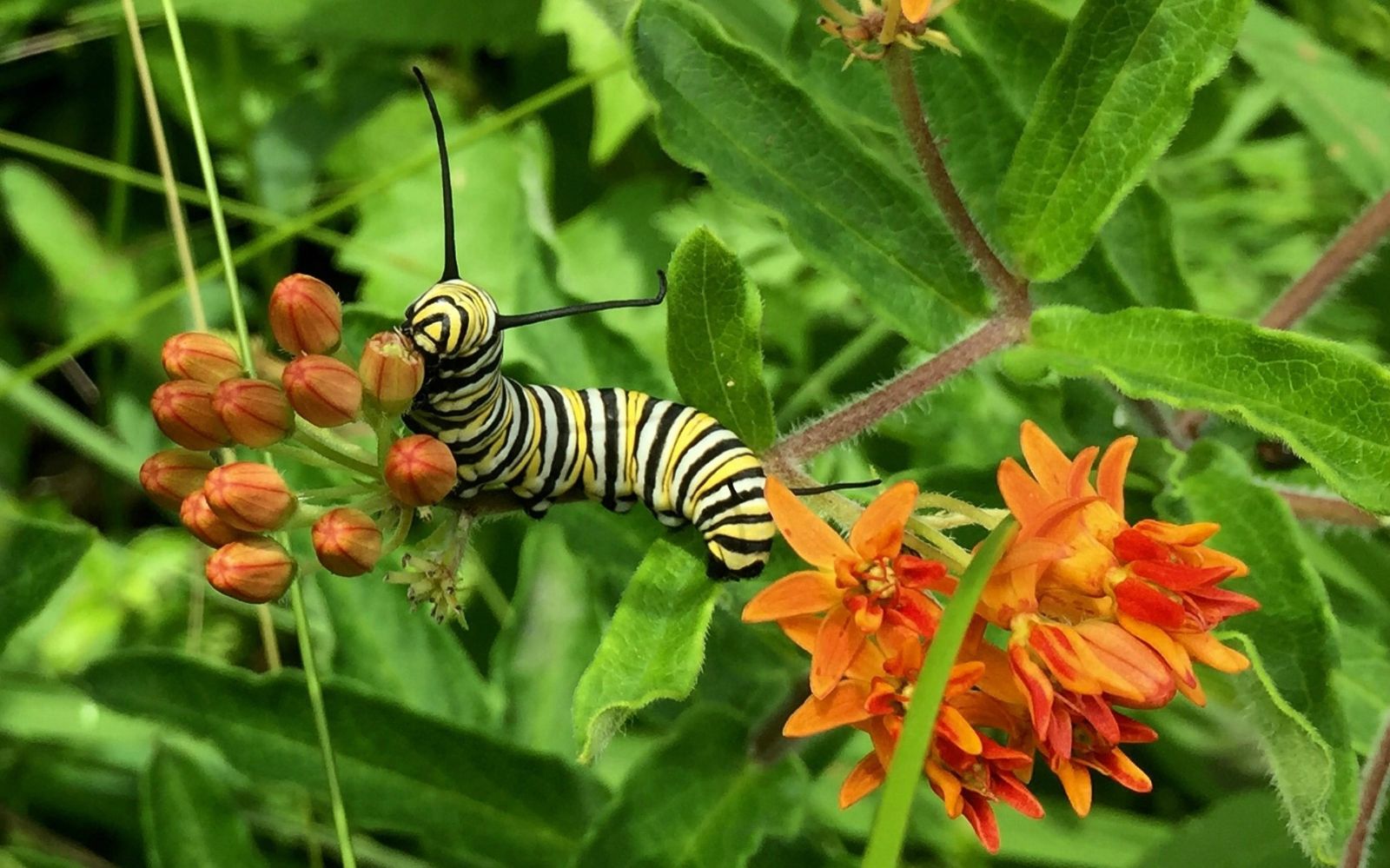
Monarch caterpillar on butterfly weed (Asclepias tuberosa). Photo by E. Honeycutt.
Hot off the press is the updated Monarchs, Milkweed & Georgia Gardeners educational brochure. This resource provides everything you need to know about the different varieties of milkweed and what to plant to support monarch butterflies and other pollinators. It even shows what to plant by Georgia ecoregion and highlights what not to plant. You can download a copy on our Educational Resources webpage under the landscaping brochures and plant lists tab. Printed copies may be available at local GNPS chapter events later this summer. Below in the chapter news section, you will see that events for the Great Southeast Pollinator Census are in the works!
Plant Spotlight: Annuals
Ellen Honeycutt
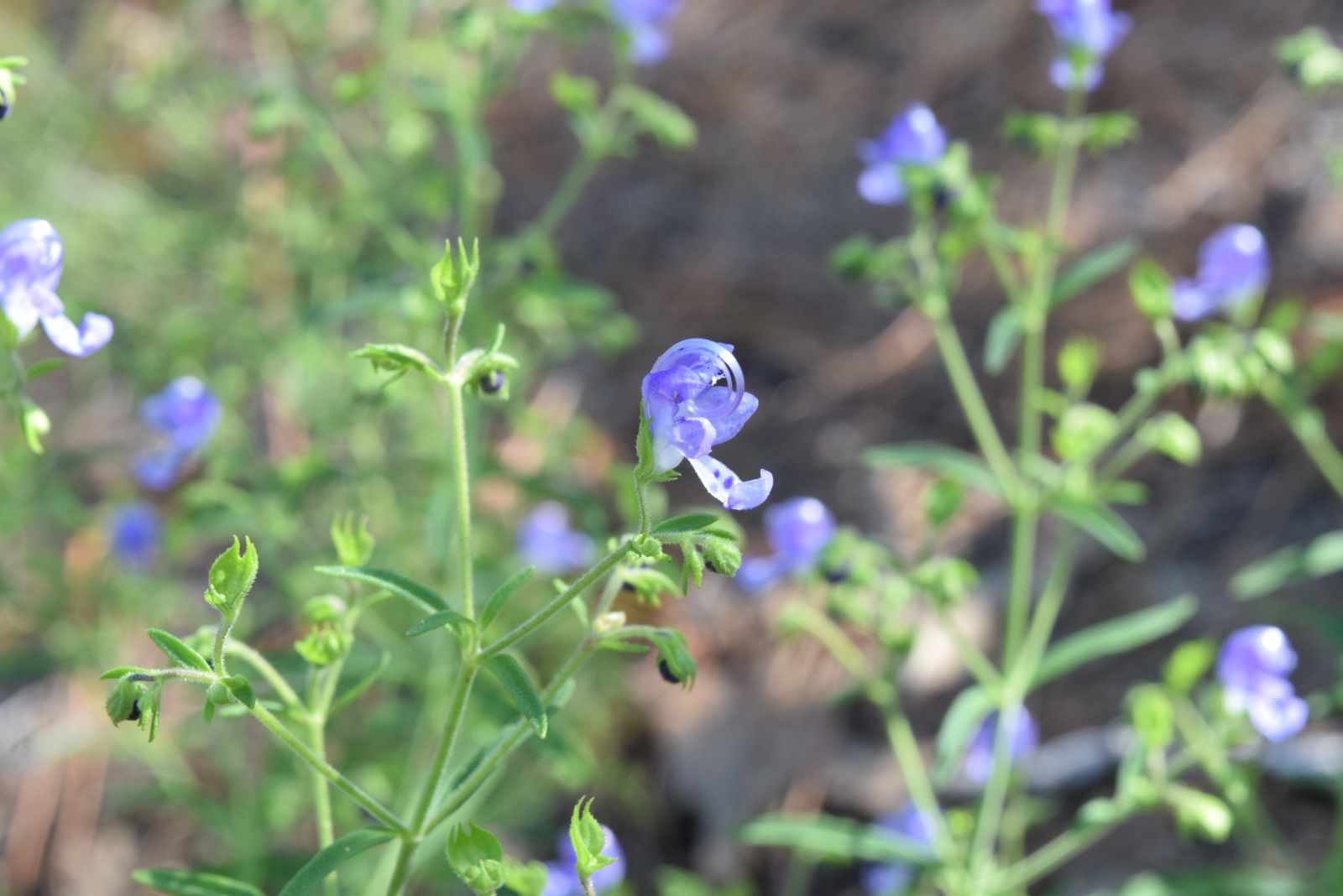
Blue curls (Trichostema dichotomum). Photo by E. Honeycutt
Now is the time when native annuals are growing like crazy. Annual plants tend to be prolific because the whole strategy of an annual plant is to make as much seed as possible to keep the species going. In contrast, perennial plants, whether they be herbaceous or woody, don’t have to produce as many offspring because they expect to live another year and can make more. Many annual plants need a warm spring soil temperature to germinate so they start to become more noticeable about now.
You may not be aware that we have native annual species so I’d like to mention a few of the common ones. Photos are not included for all of these, but hotlinks to photos are included. You can always take the scientific name to find more photos and information using your favorite search engine or an identification website like Lady Bird Johnson Wildflower Center or the Flora of Southeastern US (FSUS).
In the garden you are likely to encounter seedlings of American burnweed (Erechtites hieraciifolius), Mare’s tail or horseweed (Erigeron canadensis, synonym Conyza canadensis), and Copperleaf or Three-seed mercury (Acalypha virginica is one example). These are prolific throughout the state and easily pulled as young seedlings if needed.
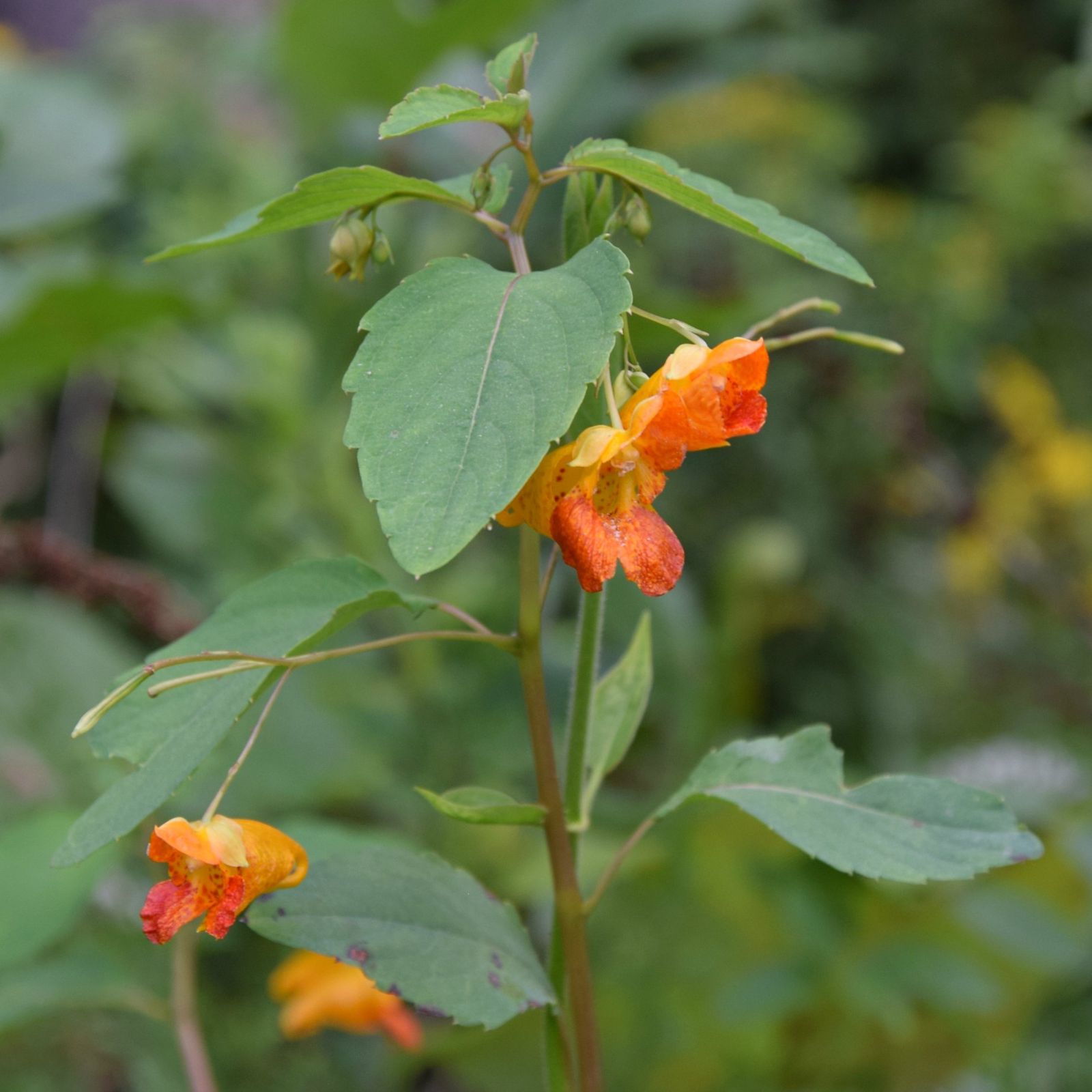
Jewelweed (Impatiens capensis). Photo by E. Honeycutt.
In damp areas like streamsides, you might find a type of Jewelweed (Impatiens capensis) or Pale jewelweed (Impatiens pallida), although the latter has a more northern presence. In good moisture these are tall and prolific, often creating thick groups. They are attractive to hummingbirds and other pollinators, and their spring-loaded seed capsules are fun to illustrate their other common name: touch-me-not (but there are no ill effects from touching them).
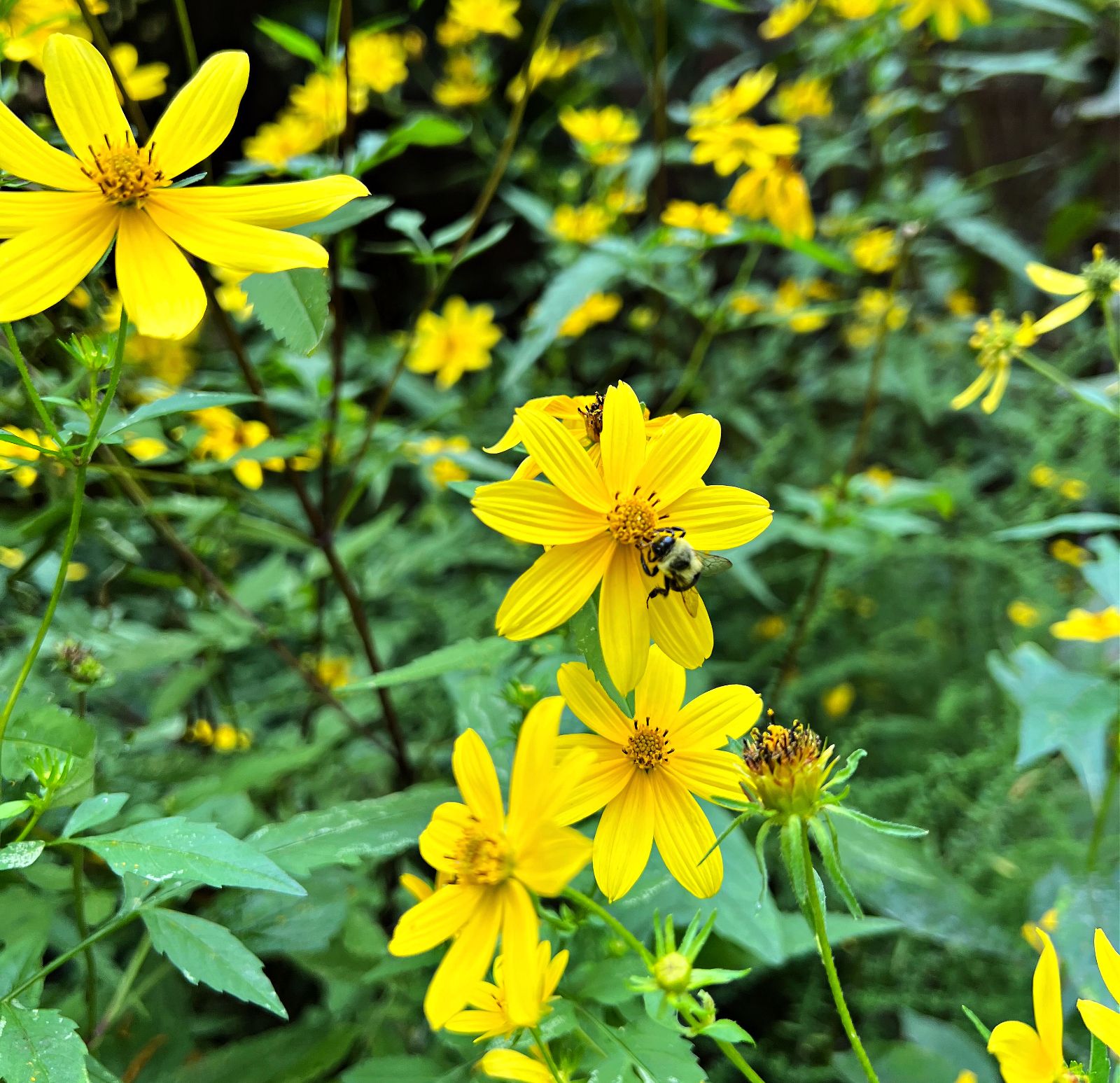
Tickseed-sunflower (Bidens aristosa). Photo by E. Honeycutt.
Some of the more attractive and specialized annual plants include Rose gentian (Sabatia angularis); Dwarf St. John’s Wort (Hypericum mutilum); and annual sunflowers like the classic Sunflower (Helianthus annuus) – which is not native to Georgia and is mostly from bird feeders - and Stone Mountain daisy (Helianthus porteri), which is specialized on rock outcrops in the wild but can grow in gardens. All of these species have perennial relatives in the same genus that you might recognize more (and that is also true for Erigeron).
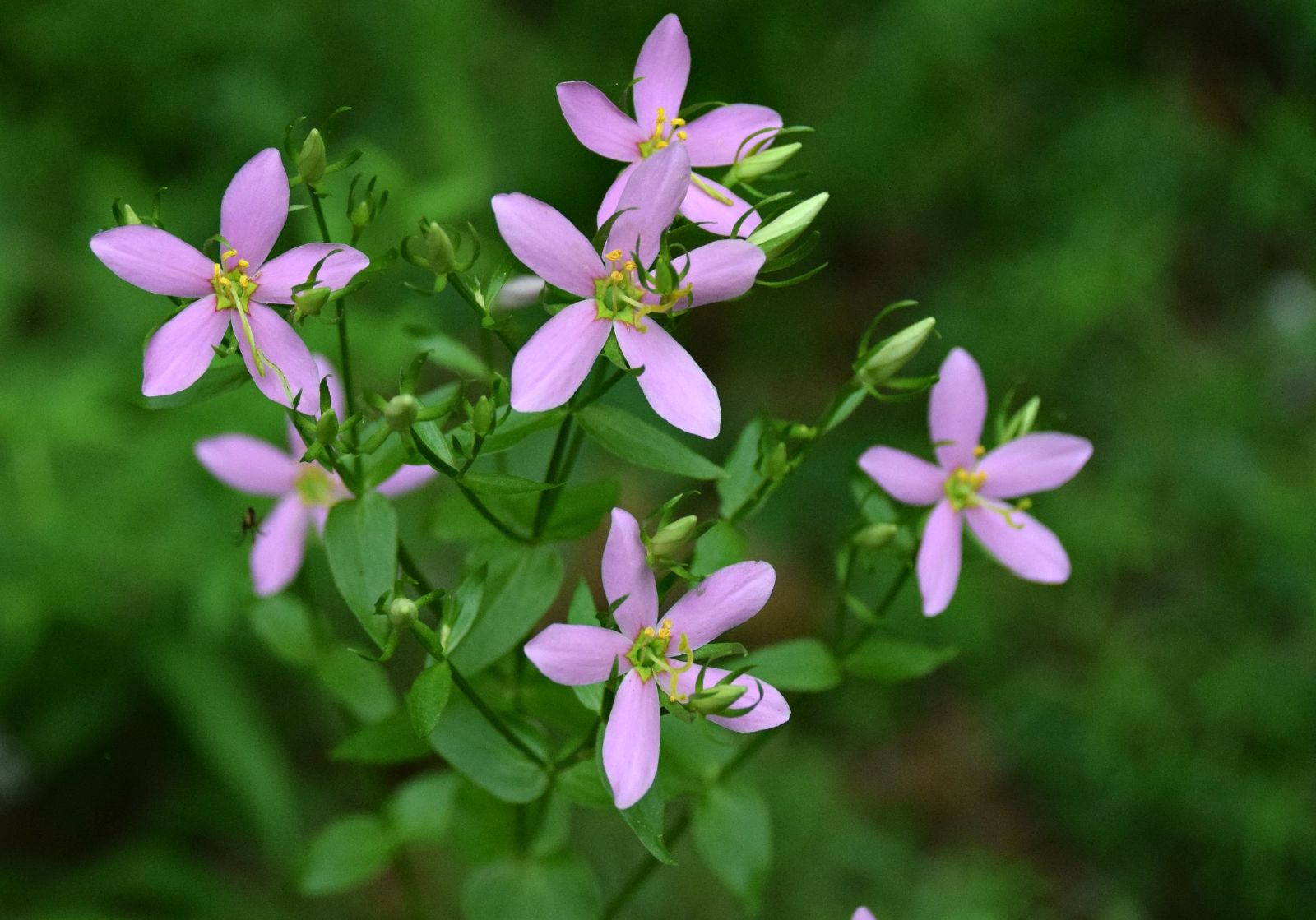
Rose gentian (Sabatia angularis). Photo by E. Honeycutt.
A final plant is Scarlet sage (Salvia coccinea); it is not native to Georgia but used often for annual color and to support hummingbirds and, like many annuals, can reseed and appear again the next year.
Annuals have a role in our ecosystem, including being a good source of food for granivorous birds and small mammals. The thing about annuals: if you don’t like them, they only live one year. If you do like them, unfortunately they only live one year! Either way, you can depend on them to set a LOT of seed, so act accordingly.
Invasive Species Management (Part 4): Understanding Target Plants
Heather Brasell
In previous articles in this series about managing invasive species, I’ve discussed Integrated Pest Management – using a combination of cultural, mechanical, chemical, burning, and biological control methods appropriate to the site, vegetation community, scale of operation, and project objectives. In this article, I’ll discuss the importance of understanding the characteristics of the target invasive plants that influence your decisions for controlling them. I’ll also consider a wide range of control methods, including foliar spray applications that are best used only by people who are trained and experienced with safe and effective herbicide application methods.
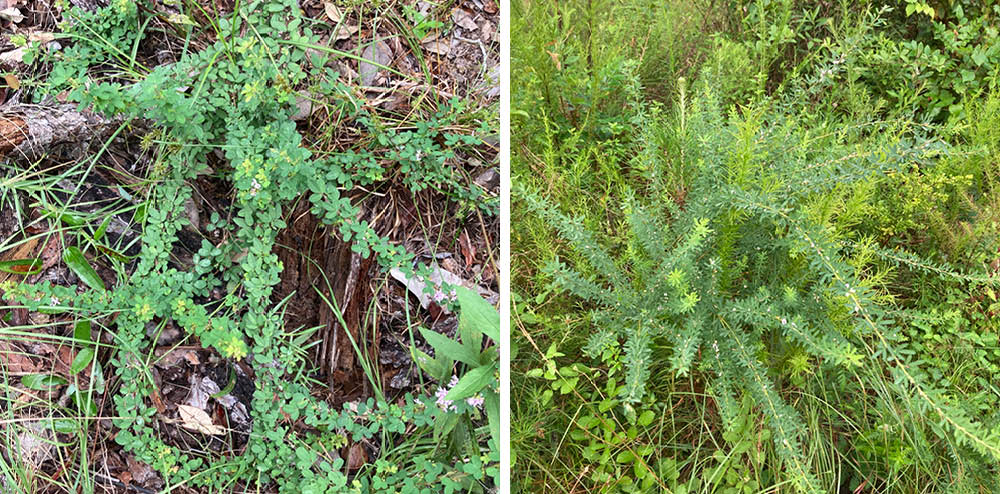
Native Lespedeza virginica / slender lespedeza (left) is easily mistaken for invasive Lespedeza cuneata / invasive sericea lespedeza (right) when it is not blooming. (Photos by H. Brasell)
Regardless of the project, our overarching goal is to kill the invasive bad guys, without harming the native good guys, wildlife, soil, or water quality. A lot of the decisions you make involve establishing priorities so you maximize your impact with the limited resources at your disposal.
The GNPS Advocacy Committee is gearing up again to work towards changing the state flower. Cherokee Rose (Rosa laevigata) was designated as the state flower of Georgia in 1916 under the mistaken belief that it was indigenous to Georgia; however, it is indigenous to Asia, and its introduction to Georgia was the result of deliberate cultivation. During the 2024 legislative session, Senate Bill 518, an act to change the state flower to Sweetbay Magnolia, passed unanimously in the Senate Committee for Economic Development but did not make it to the Senate floor for a vote before Crossover Day. Through the work accomplished last year, GNPS learned that most legislators are in favor of a change - so it is time to get back to work!
Armed with a refreshed strategy, the GNPS Advocacy Committee is pursuing a multi-pronged approach over the next several months. How can you get involved? The Advocacy Committee is looking for a connection to Governor Brian Kemp or the First Lady, Marty Kemp. We are also seeking a Republican representative who may be interested in sponsoring a bill in the House to increase the support for change. If you have any relationships or connections that may be useful in this pursuit, please contact Advocacy co-chair, Michael Cowan, at michael.cowan@gnps.org
Volunteer at the GNPS Stone Mountain Propagation Project
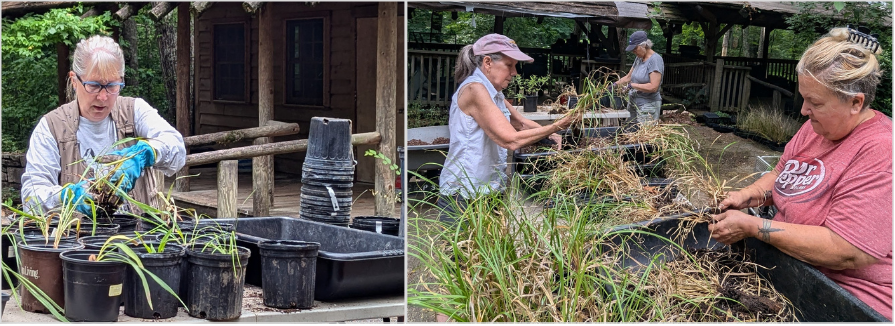
The Stone Mountain Propagation Project (SMPP) is volunteer led and could use more GNPS members to support this growing work, especially during this hot and dry summer! SMPP's approach has broadened with the goal to produce as many plants suitable for habitat restoration needs. This includes trying to grow several different types of grasses, by the thousands, in plug size and 10-15 different flowering pollinator plants. SMPP still accepts rescued plants and will continue to propagate native plants not readily found at nurseries. SMPP volunteers have a diverse background, experience with gardening, or knowledge of native plants that gets shared at work days on a weekly basis. If you are interested in joining SMPP's efforts or would like to stay up to date on their progress, please contact SMPP_Admin@GNPS.org to be added to the mailing list. A list of work days can be found here.
Help Shape the Future: 2025 State Board Positions
Have you ever considered bringing your perspective and experience to the GNPS State Board of Directors? As the organization continues to increase mission-critical activities and transition to staff-led operations, we are looking for individuals to lend their time and talent towards the grand vision of growing a better landscape in Georgia. The GNPS State Governance committee is starting its recruitment process for 3-year board member positions beginning on January 1, 2025. Critically, we are looking for our next Treasurer, who will provide general oversight and analysis of the Society’s finances (not day-to-day bookkeeping). We are also focused on adding more diverse voices to the Board, specifically people representing BIPOC communities, east and west Georgia communities and the landscaping/green industry. If you are interested and want to learn more, please contact Governance committee co-chairs, Chadd Reynolds (chadd.reynolds@gnps.org) or Lori Conway (lori.conway@gnps.org).
Malcolm Hodges will provide an introduction to lichens on Sunday, July 14 from 2:00 - 3:30 p.m. at the Unitarian Universalist Fellowship of Athens (780 Timothy Road, Athens). Hodges earned his BA in Biology from Rice University and a Masters in Zoology from Mississippi State University. Now retired, he was Director of Stewardship for The Nature Conservancy in Georgia, serving as a biologist and land manager for the nonprofit from 1992-2020. Hodges worked with Sean Beeching and others on the Georgia Lichen Atlas Project, which documented, described and mapped lichen species across the state. Project results may be seen online at the Georgia Biodiversity Portal site, georgiabiodiversity.org/portal/.
Creating a Rain Garden, August 14
On Wednesday, August 14 from 6:00 - 7:30 p.m., Hall Roberts, a local landscape architect (and Chapter member), will guide us on how to design, install and maintain a native rain garden. He is the owner-operator of Royal Landscape and Gardens, LLC., in Athens. Hall has a Masters in Landscape Architecture from Mississippi State University and many years of experience in landscaping. Join us for this expert program at the Sandy Creek Nature Center, 205 Old Commerce Road, Athens.
Augusta's River Region
Gardening with Moths in Mind, July 11
Sarah Osbourn, M.S. and current president of the Augusta River Region Chapter, will share how to support moths in your backyard ecosystem through native plant selection. Join us on Thursday, July 11 at 6:30 p.m. at the UGA Extension Columbia County (6420 Pollards Pond Road, Appling) for this informative presentation. Click here for more information.
Coastal Plain
Coastal Plain Chapter Awards Garden Grants
Okefenokee Swamp Park, Waycross received a $300 plant grant for restoration and conservation purposes for pollinators and wildlife at the Okefenokee Swamp Park. The purpose of the project is to educate students and adults of all ages about the ecological importance of native plant species and pollinators. During field trips and summer camp programs, the plants will be used to educate school-aged children about life cycles, habitats, adaptations, pollinators, basic needs of plants, etc.
Abraham Baldwin Agricultural College’s Georgia Museum of Agriculture Destination Ag Program, Tifton received a $300 in plants grant for a pollinator/native plant garden. Destination Ag is an agriculture literacy program that connects Pre-K through 5th grade students to the source of their food, fiber, and shelter. The pollinator/native plant garden will be connected to academic standards per grade level and incorporated into lesson plans.
Abraham Baldwin Agricultural College’s Forest LLC in Chula received a $300 grant in native plants for three sign gardens at the entrance of the John W. & Margaret Jones Langdale Forest. The gardens were part of a senior project for students at ABAC School of Forest Resources.
Okefenokee Heritage Center, Waycross received a $300 grant in native plants for Native Educational Heritage Garden. The intended audience will be Open Air Art Classes, Venue/Museum Guests, School field trips, and summer camp attendees.
Mims’ Kids Wellness and Community Gardening Camp
The Native Plant Habitat (GNPS Silver Certification) of CPC past-president Mary Alice Applegate was an outdoor classroom for one day of the Mims’ Kids Wellness and Community Gardening Camp held from June 10-14 in Tifton. The “Young Sprouts” toured the Applegate front and back yard, learning about native plants’ role in biodiversity, native plant pollinators and the importance of pollination to seed production and agriculture.
Among the highlights, kids touched Gulf Fritillary (Agraulis vanillae) caterpillars who were munching on passion vine (Passiflora incarnata) and took a sniff of the minty aroma of wild bergamot (Monarda fistulosa).
Governor's Honors Program
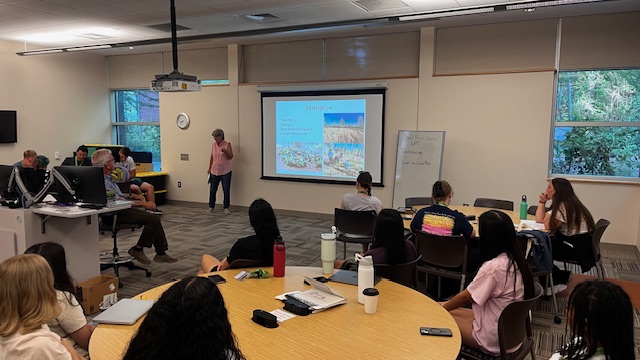
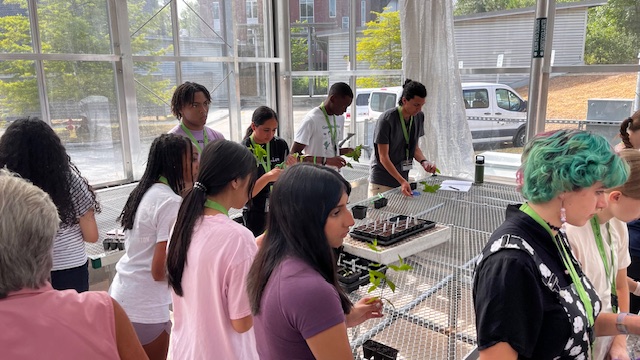
The Coastal Plains Chapter visited the Agriscience and Biotechnology (AG) students attending the Governor’s Honors Program at Georgia Southern University. Paul Sumner and Amy Heidt provided the AG students with a hands-on lesson on planting and propagation using native plant species, under the aid of their instructors, Kaleb Bell and Dr. Kelly Carruthers. In addition, the students were able to learn about GNPS and the activities of the Coastal Plain Chapter while working with Georgia DNR and GDOT in plant rescue and out planting into protected areas. They also learned about blueberry researchers using donated plants from Coastal Plain Chapter to increase overwintering of pollinators in blueberry crops and the importance of native plants in the coastal plain ecosystem.
Amy Heidt telling Ag students about the Georgia Native Plant Society and why it is important to save native plants and use them in our landscapes.
Students in the greenhouse getting hands-on experience sowing seeds, propagation by cuttings, and up-potting small plants of native species.
Fringed Campion
Fringed Campion Chapter receives Beautification Award
The Fringed Campion Chapter will host a plant rescue in Crawford County on Tuesday, July 13 at 8:00 a.m. As with all rescues, attendance is limited and requires registration - click here to register.
Check our Facebook page for more programs and events.
Intown Atlanta
Pollinator Picnic during the GSE Pollinator Census, August 24
Join the Intown Atlanta Chapter and Food Well Alliance for a Pollinator Picnic during the Great Southeast Pollinator Census at Legacy Park in Decatur. There will be games, door prizes and free samples of honey and native seeds. Bring a snack or purchase something from our vendors. This is a great opportunity to meet and mingle with other native plant and local food enthusiasts. We will have activities for all ages, so bring the whole family!
Information will be provided on the Pollinator Census and instructions on conducting the count, so you can participate in the 15 minute count while you are at Legacy Park, or take a worksheet home to do it in your own backyard.
North Georgia Mountains
A beautiful June morning at the Bradley Knob Native Plant Garden workday, a partnership with USFS.
Upcoming Field Trips and Meetings this Summer
Join us for a cookout hosted by one of our board members on Saturday, July 13, details to be announced. On Saturday, August 10, the chapter will take a trip to the North Georgia Native Plant Nursery in Canton to learn about their propagation strategies, and probably buy some plants! On Saturday, September 14, we will host Becky Griffin who will present on monarchs.
North Metro Atlanta
Webinar: Seasonal Explorations of Native Plants in the Piedmont, July 10
Join us virtually at 7:00 p.m. on Wednesday, July 10 for the first in a quarterly education series presented by Dr. Jonathan Storm, biology professor at the University of South Carolina Upstate. Dr. Storm manages the engaging and entertaining Southern Piedmont Natural History Facebook page that features daily posts focused on the natural history of the Piedmont region of the Carolinas and Georgia. Attend this series to learn more interesting and unusual things about the common plants, fungi and wildlife in the Georgia Piedmont. You will learn interesting new facts about the plants you thought you already knew and gain better knowledge on how you can manage your plants for maximum ecological value. Click here to register.
Native Ferns of the Piedmont, August 18
Join us at the Gwinnett County Public Library - Duluth Branch (3180 Main St, Duluth) on Sunday, August 18 from 1:00 - 3:00 p.m. for a presentation by Connie Gray on Native Ferns of the Piedmont.
Heritage Park Workdays
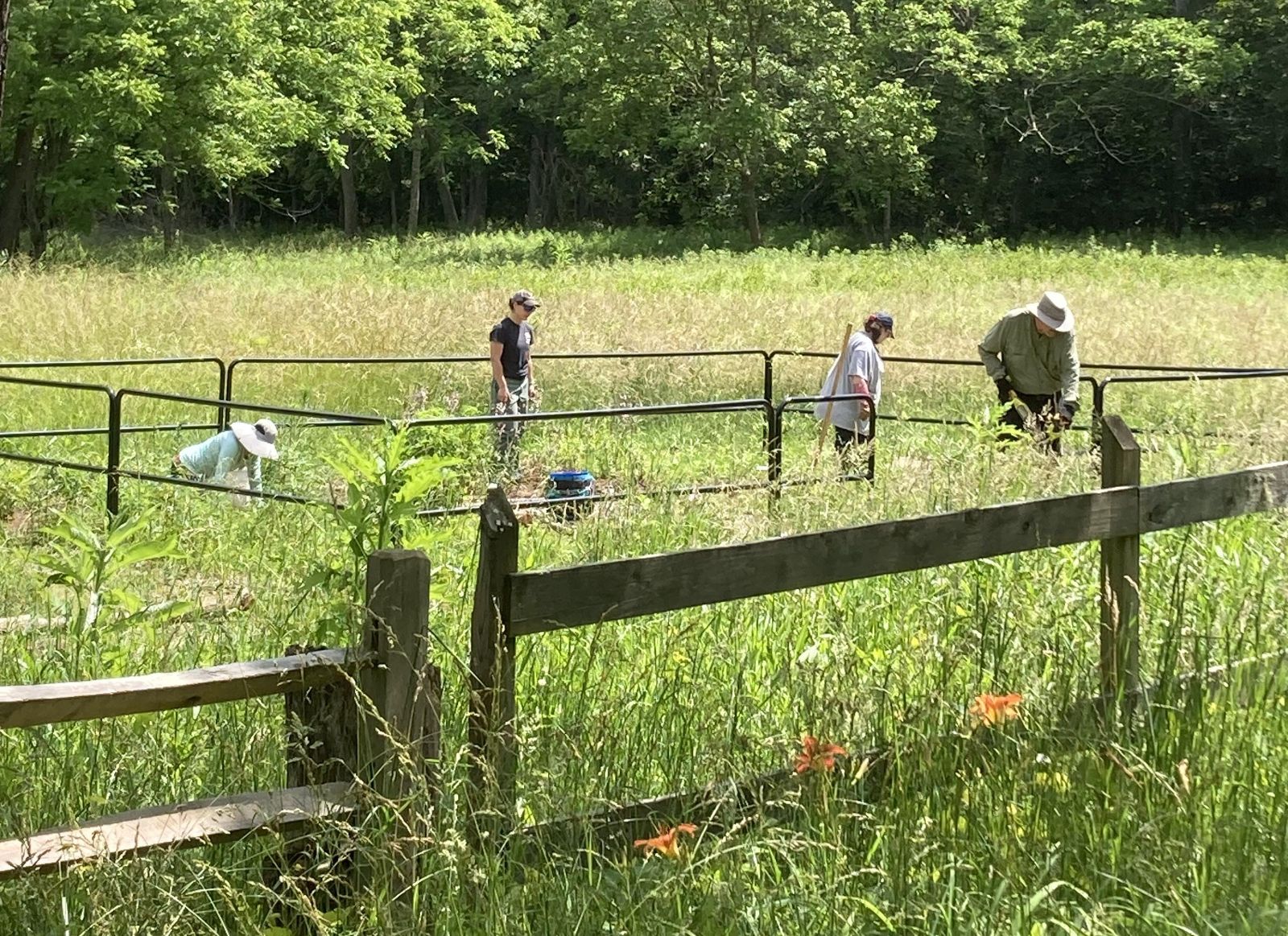
Habitat restoration work continues at Heritage Park in central Cobb County with tasks including invasive removal, native plantings and garden maintenance. Learn more below:
Join us for a workday at the habitat on the farm! We will be weeding and mulching the garden. If you plan on attending, please sign up with the following links:
On Tuesday, August 20, the West Georgia Chapter will host a presentation and panel discussion on “Invasive Plants We Love to Hate.” Everyone is familiar with kudzu, but dozens of other invasive species can pop up in our roadsides, yards, and parks, and they are easier to deal with if you can spot them early. The meeting will feature a program on recognizing and eliminating common invasive plants, presented by a panel of West Georgia Chapter members with habitat restoration experience. Please join us for a reception with light refreshments at 6:30 p.m. followed by the program at 7:00 p.m.
Bench by Local Artist Installed
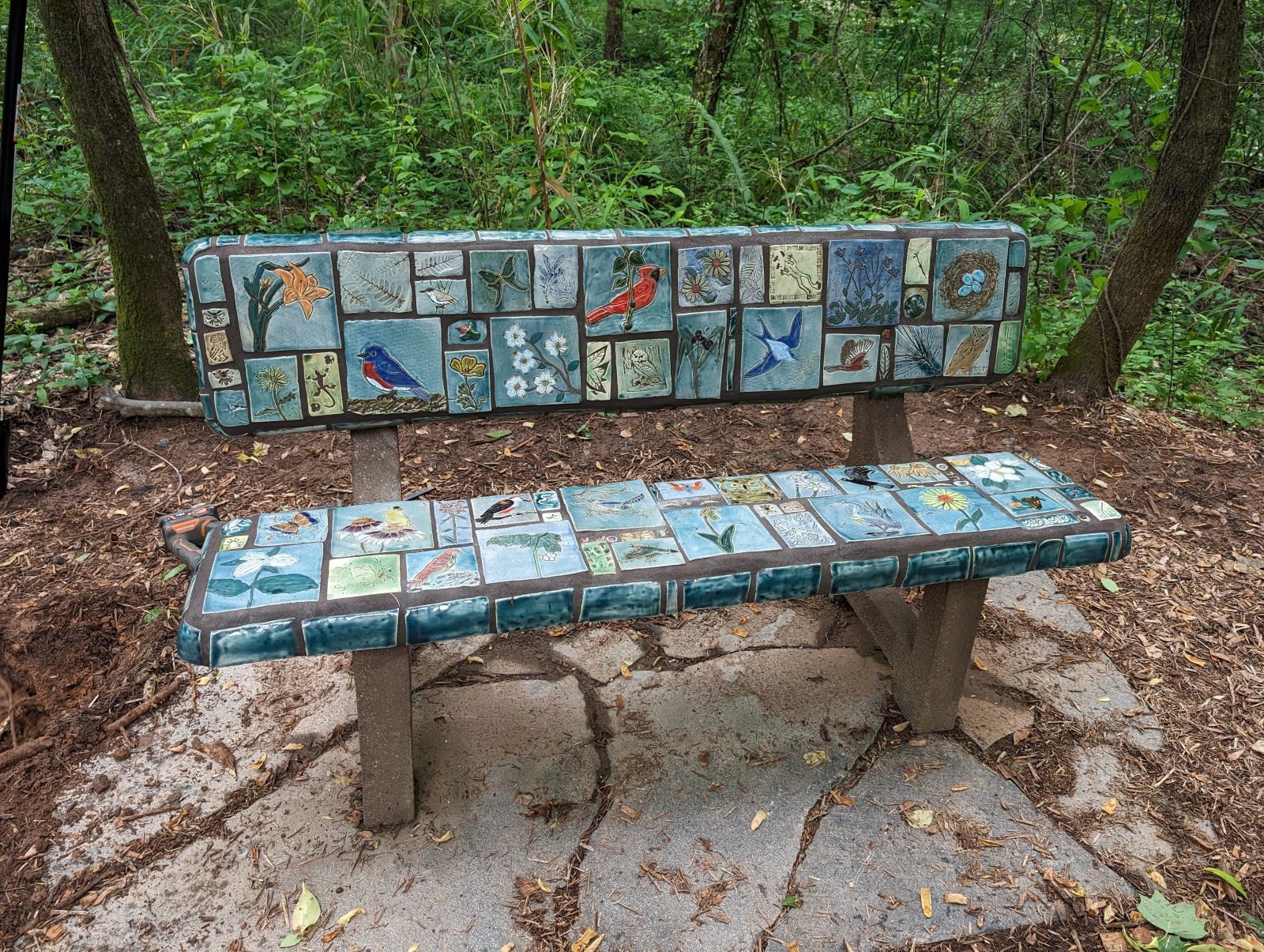
Visitors to The Nest—a designated bird sanctuary within the Buffalo Creek tract—now have a lovely place to sit while they watch birds or simply enjoy the peace and quiet. West Georgia Chapter Vice President Frank Bennett and his wife Elizabeth have generously donated a beautiful bench in honor of their aunt and uncle, Ruth and Eugene Sanders—teachers, physicists, and guardians of nature. The bench is covered with hand-painted and glazed tiles displaying images of birds, plants, and other creatures, the work of local artist Helen Helwig. The bench is protected from sun and rain by a wooden canopy resembling a pagoda roof, constructed by chapter member David Chamberlain. The Nest is located opposite the Buffalo Creek pollinator garden, adjacent to the Carrollton GreenBelt.
POY Shirts - Tank Tops for Summertime!
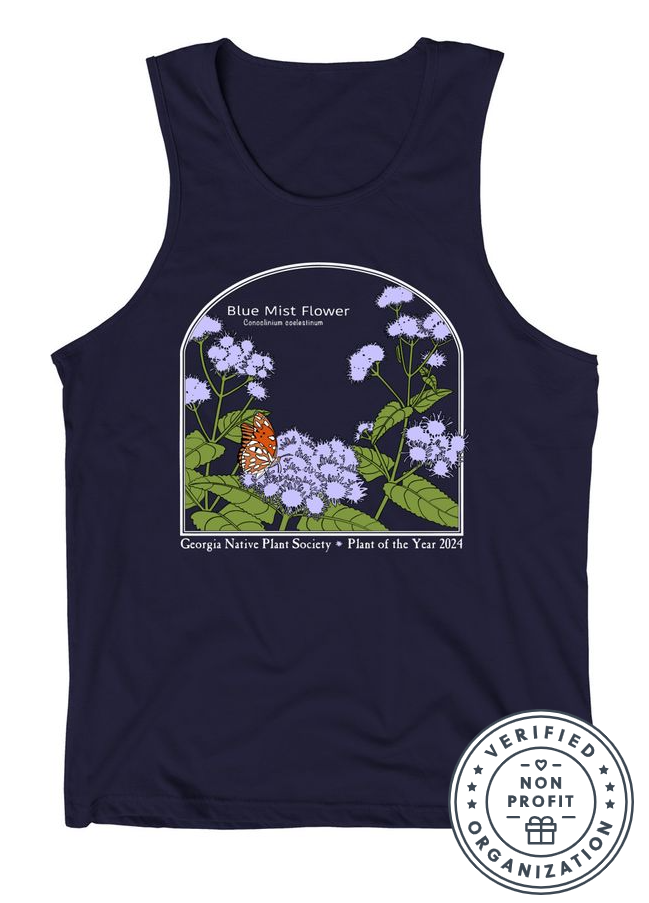
It has been a hot summer and we have just what you need to stay cool - Plant of the Year tank tops! Browse our online store for a variety of styles and colors. Each design has both 100% cotton and 60/40 cotton poly blends available - click on “size and fabric info” on each product’s page for the specific details.
.png)

.png)
.png)