Your GNPS newsletter. May not display properly in Microsoft outlook.
If you're having trouble viewing this email, you cansee it online.
July 2025 — Volume XXXI, Number 4 — Published by the Georgia Native Plant Society
Rescuing Imperiled Plants in Georgia
Amy Heidt
State agencies Georgia Department of Natural Resources (GA DNR) and Georgia Department of Transportation (GDOT) collaborate to rescue Georgia-protected plants from GDOT construction projects as required by the Georgia Wildflower Act. These rescued plants were relocated to suitable habitats on nearby conservation lands. GA DNR botanists note that protected plants often exist within special plant communities that are also destroyed during construction. Even though there is no legal requirement or funding to rescue unprotected plants, both GDOT and GA DNR biologists have shown a willingness to relocate these plants but lacked the necessary resources. In 2020, Georgia Native Plants Society’s (GNPS) Coastal Plain Chapter proposed an idea to GA DNR: with the Coastal Plain Chapter’s experience in plant rescues and relocating native plants, they could assist GA DNR by moving common plants and rare plants impacted by construction.
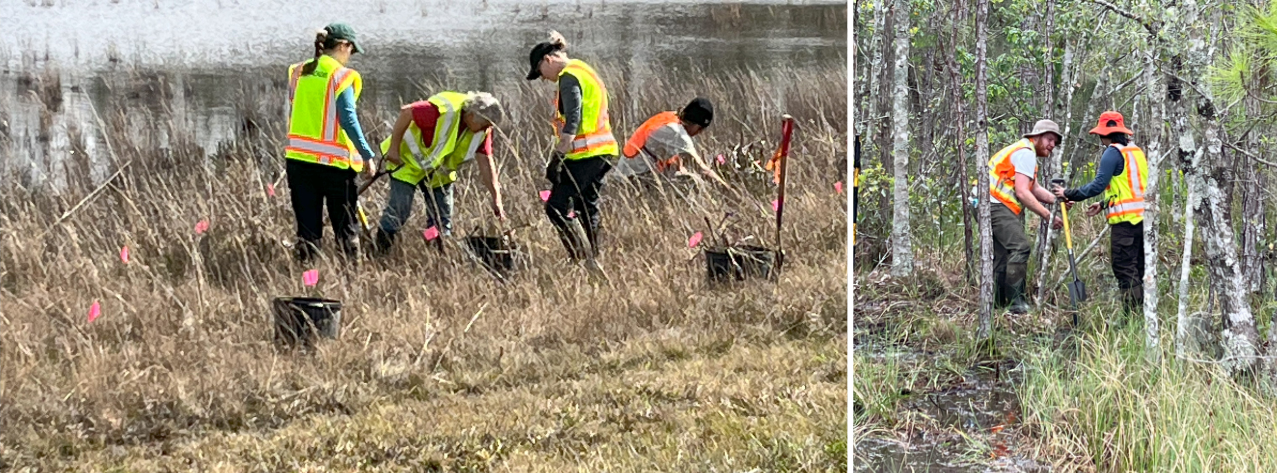
In October of 2020, CPC partnered with DNR personnel to rescue and hold two species of rare pitcher plants from an industrial site in the southeastern of the Coastal Plain close to Waycross. Several hundred Sarracenia psittacina (parrot pitcher plant) and Sarracenia minor (hooded pitcher plant) were potted and moved to the CPC safeguarding nursery until replanted into three nearby conservation areas. In 2021, with support from GA DNR, GDOT allowed CPC volunteers to help rescue native plant communities in wetlands alongside Doerun Pitcher Plant Bog Wildlife Management Area without involving protected plants.
In spring of 2022, GA DNR coordinated with GDOT for a larger rescue in Twiggs County that involved more than 350 plants of three species. Botanists assisted Coastal Plain and Fringed Campion Chapter members in identifying rare species, including a rare trillium, rare milkvines (Matelea species) and an unidentified skullcap species (Scutellaria). Members of both chapters, in a coordinated effort, dug and potted the plants in the field and then transported them to the Coastal Plain Chapter’s safeguarding nursery for holding until transported to the State Botanical Garden in Athens for research and safekeeping.
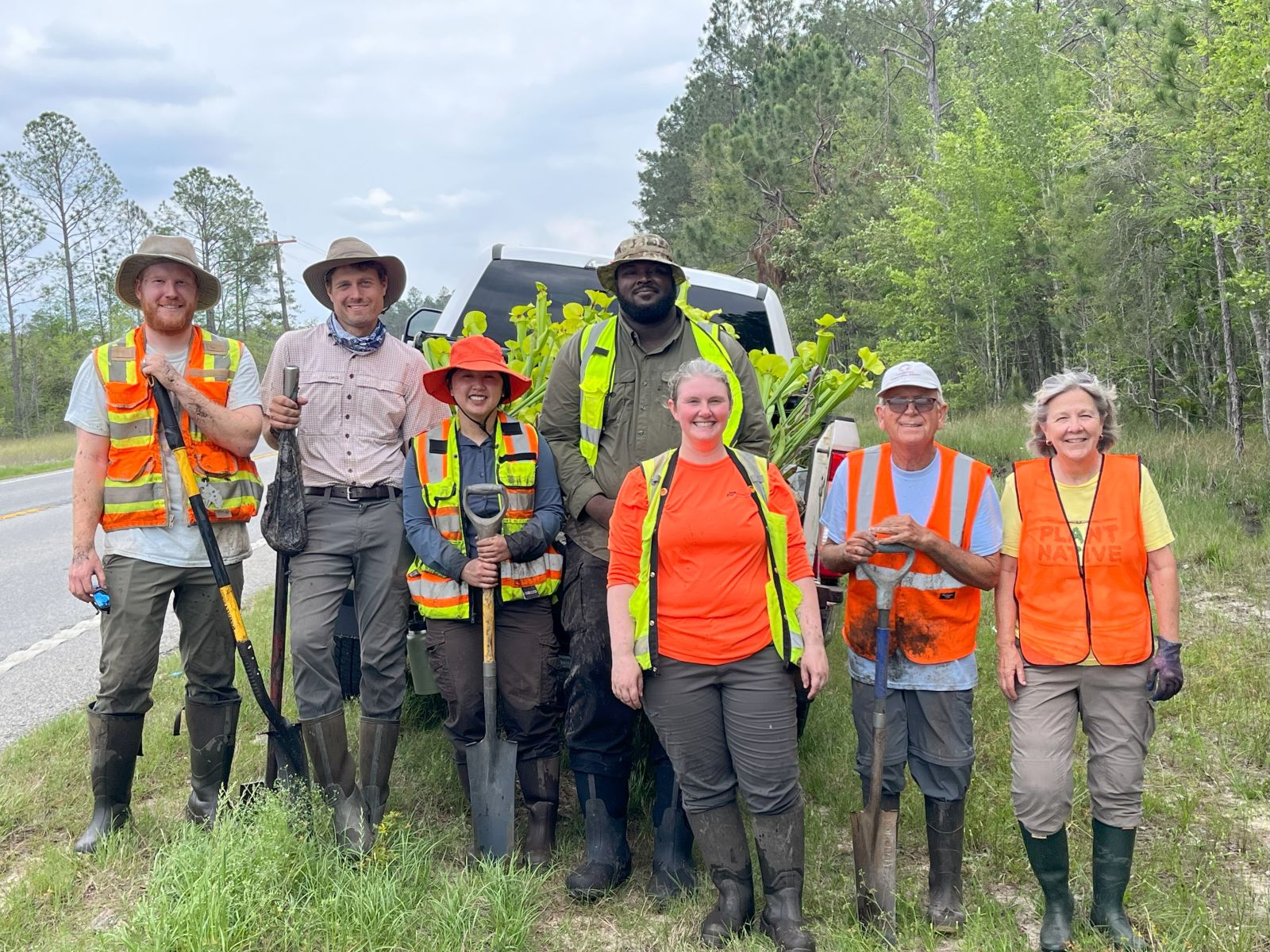
The first Coastal Plain Chapter partnership rescue for protected species on a GDOT construction site occurred in 2023-2024 in Lowndes and Lanier counties, targeting Sarracenia minor (hooded pitcher plants). Over 500 were relocated. Another rescue was completed in March of 2025 in Clinch County. GDOT and GA DNR, with GNPS members from the Coastal Plain and Maritime Chapters assisting, removed from a road construction site and replanted over 200 yellow (Sarracenia flava) and hooded (Sarracenia minor) pitcher plants.
A Coffee County rescue conducted on April 15, 2025 marked the first instance where GNPS entirely led the rescue of a protected species on behalf of GA DNR: the yellow pitcher plant, Sarracenia flava, considered vulnerable in Georgia. Over 200 plants were rescued for safeguarding on protected land. Due to staff shortages, GA DNR relied entirely on the Coastal Plains Chapter’s assistance for this rescue and their safeguarding nursery for temporary care until the plants can be returned to nature. GNPS’s involvement has facilitated the preservation of rare plant populations and contributed to stabilizing the species' status in the landscape.
The GA DNR-GDOT-GNPS partnership has been rewarding for all involved and of exceptional value to otherwise lost native plants. Other GNPS chapters have taken up the call for rescue partnerships including Fringed Campion, Augusta and Maritime. If you and/or your GNPS chapter would like to become involved in this type of conservation work join the Georgia Plant Conservation Alliance (GPCA) and become a plant guardian. Training is available from the GNPS Conservation Committee with assistance from trained chapter members.
Compiled by Amy Heidt, GNPS Conservation Chair, with information and permission from Lisa Kruse, GA DNR Senior Botanist.
Plant Spotlight: Get Ready for the Pollinator Census
Ellen Honeycutt
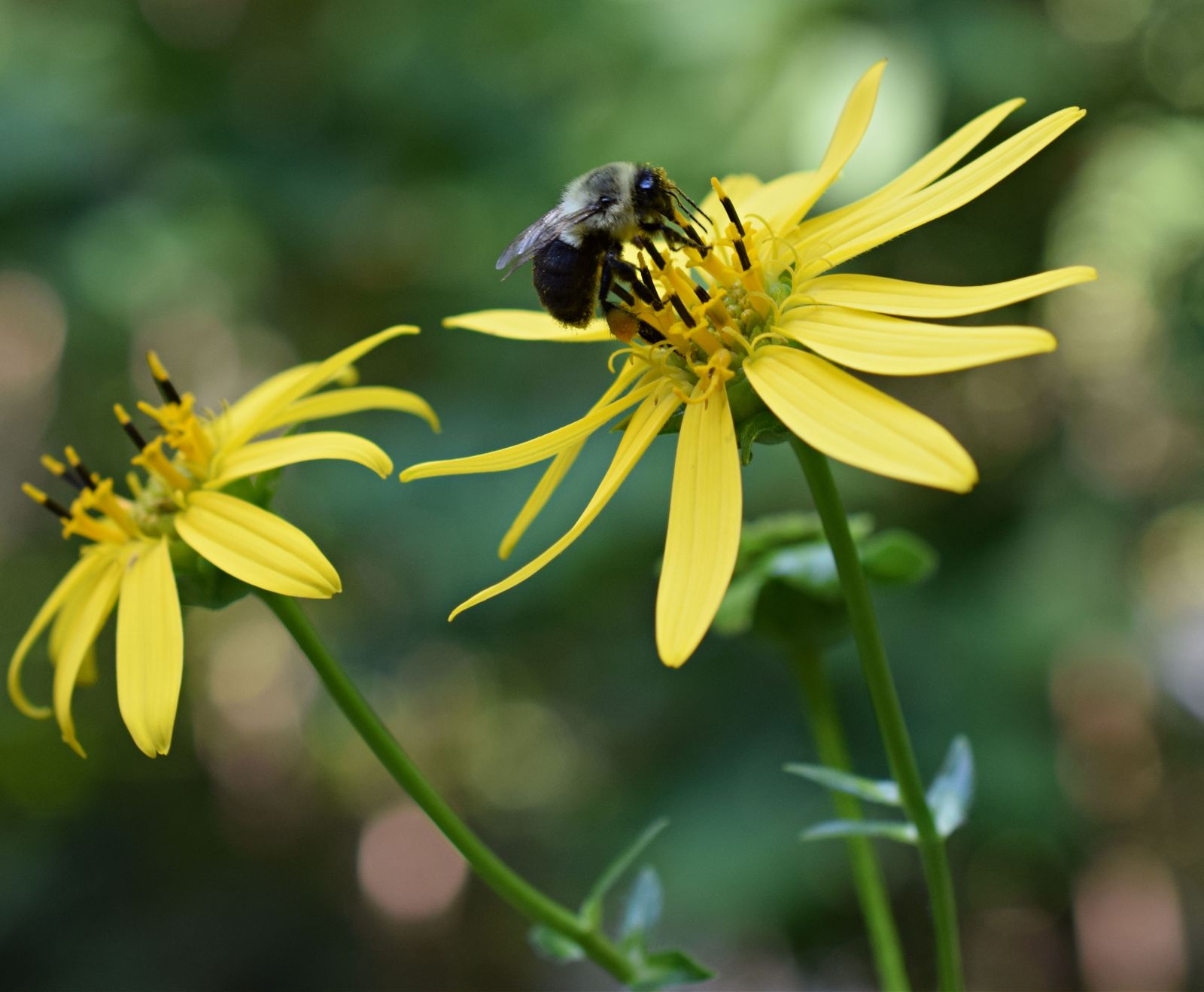
Bumble bee on rosinweed (Silphium).
This year will be the 7th Pollinator Census, an event that started in Georgia but which is now known as the Great Southeast Pollinator Census and includes most of our adjacent states. It is a fun citizen science activity that helps people get more acquainted with their local pollinators.
The census is held every year around the third weekend of August, allowing for schools to have good participation in the event. This year it is Friday August 22rd and Saturday August 23rd. Since the census is consistently held during the same time period, we can recommend plants that we know will likely be blooming so that you can add them to your garden.
The native superstars in my north Georgia garden in mid-August are Joe Pye weed (Eutrochium) and cutleaf coneflower (Rudbeckia laciniata). I have also counted on rosinweed (Silphium), swamp milkweed (Asclepias incarnata), tall thistle (Cirsium altissimum), ironweed (Vernonia), mountain mint (Pycnanthemum), and partridge pea (Chamaecrista fasciculata).
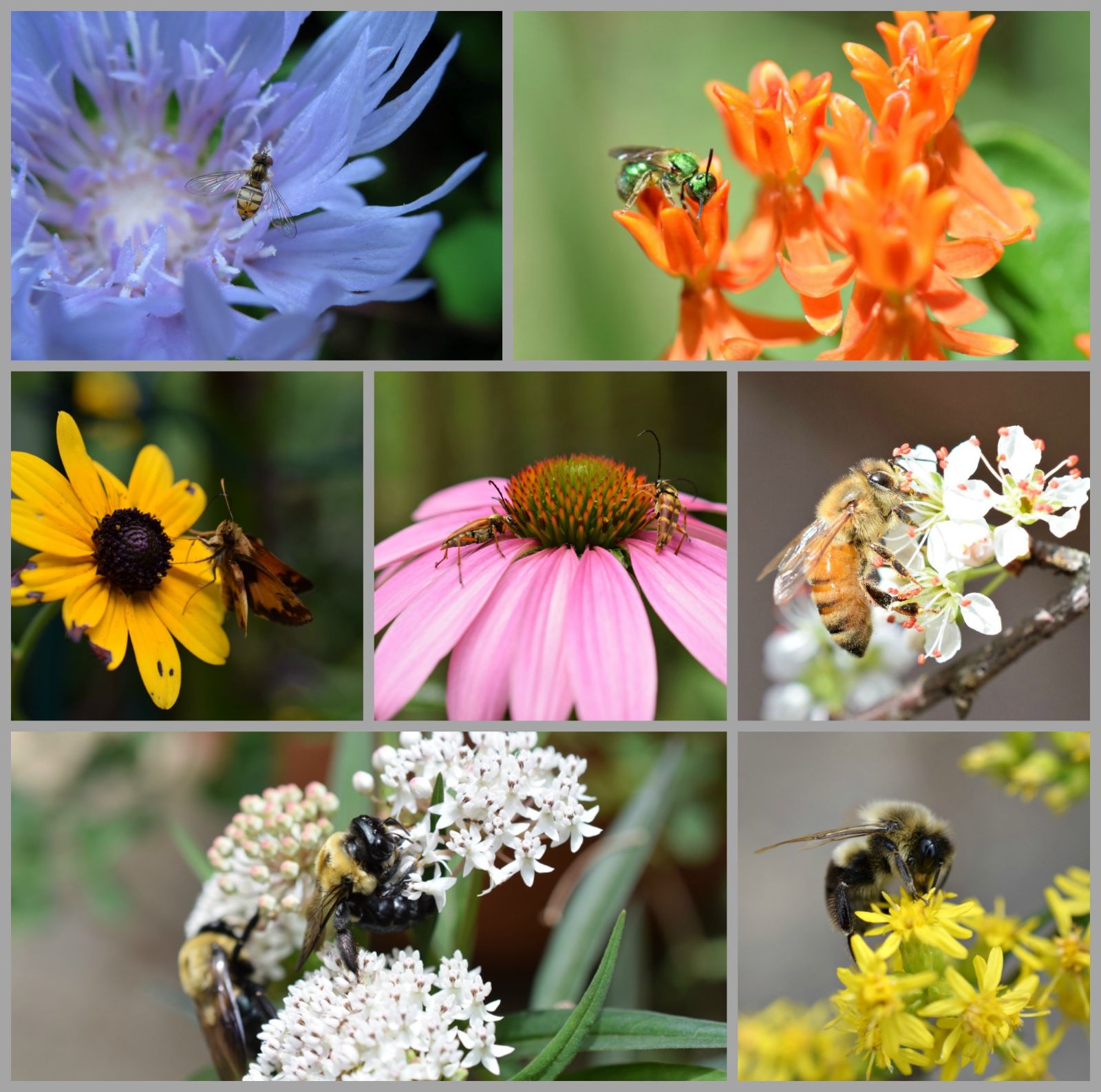
Examples of the categories - Top row: Syrphid fly and small green bee; Middle row: butterfly (skipper), beetles (category 'other'), honey bee; Bottom row: carpenter bee (smooth butt) and bumble bee (fuzzy butt). Missing: wasp is the last category.
Flowers that have been blooming in the Coastal Plain during previous census counts include: spotted beebalm (Monarda punctata), Spanish needles (Bidens), obedient plant (Physostegia virginiana), snow squarestem (Melanthera nivea), scarlet sage (Salvia coccinea), beach rosemary (Conradina canescens), dune sunflower (Helianthus debilis), Hibiscus, seashore mallow (Kosteletzkya pentacarpos), ironweed (Vernonia), rosinweed (Silphium), swamp milkweed (Asclepias incarnata), blanket flower (Gaillardia), and climbing hempvine (Mikania scandens). Non-native flowers like Zinnia and Mexican sunflower (Tithonia) are also good statewide, but I like to encourage people to count on their native flowers so that we get that kind of data into this project.
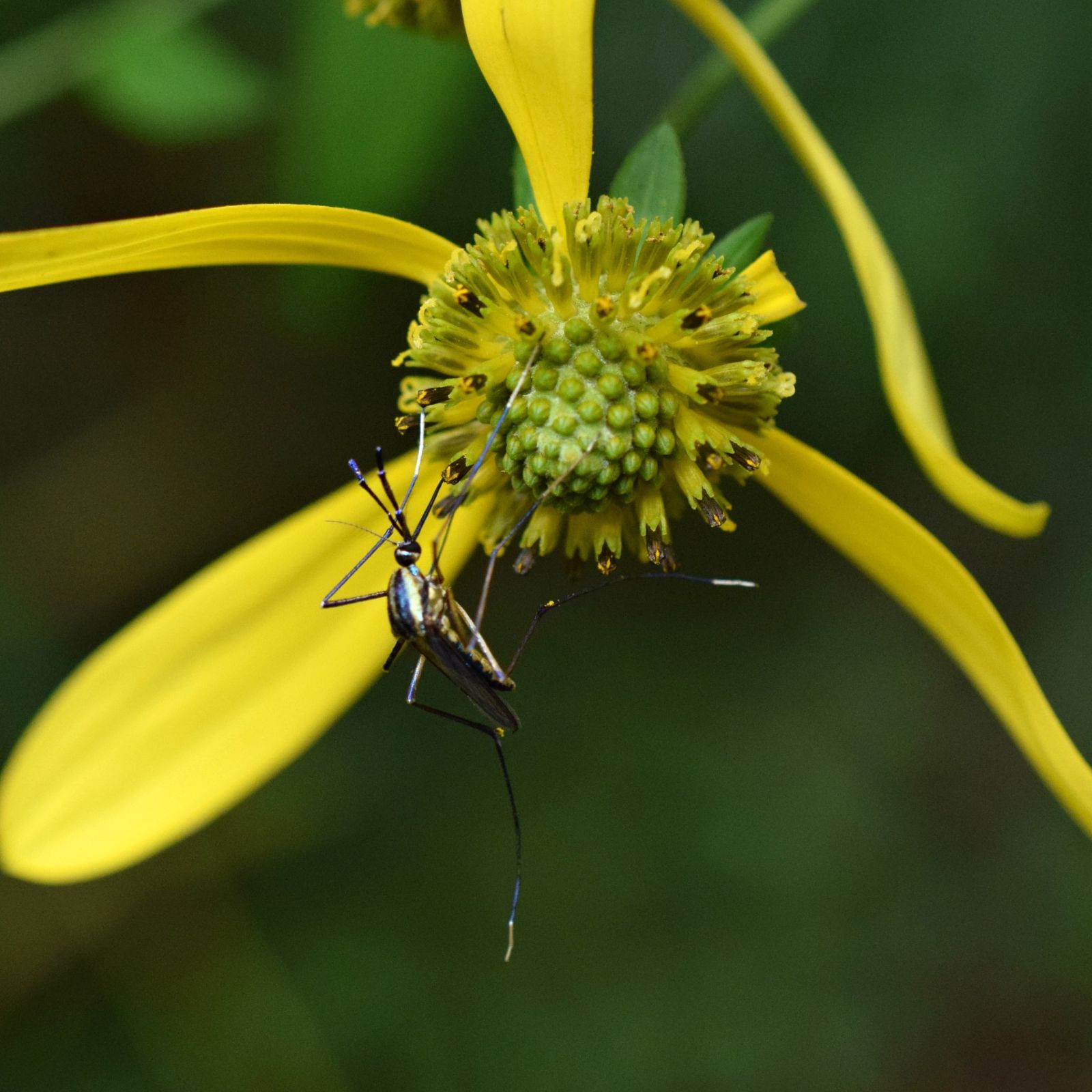
Sometimes you might discover something new: in 2019 and 2020 I found an elephant mosquito during the count. This large, beneficial pollinator doesn’t bite humans and actually preys on other mosquitoes during the larval stage.
Elephant mosquito on Rudbeckia.
I hope you’ll join the count either at home or with a group. Many GNPS chapters will sponsor counting events, as will local nature centers and county Master Gardener groups. If you don’t have a garden, you can also look out now for a nearby pollinator garden that you can use. Each count lasts only 15 minutes, and you can do as many of those 15-minute counts as you like. At home, I like to do at least one in the morning and one in the afternoon to see how the pollinators change over the day.
If you’re helping with a count, treat this as an education event; this activity is a great way for folks to realize that:
Certain plants support certain insects so a diversity of plants is important.
Certain plants bloom at different times so having a succession of blooming plants is key to support pollinators throughout the year.
Some plants don’t have many pollinator visitors at all so knowing what works well in your area would allow you to support the best number possible, especially in a more limited space.
Being outside and looking more closely at what is using our plants can give us a better appreciation for the local ecosystem and what we do in our gardens.
Save the Date for The Joy of Native Plants: Old Growth Forests
Join us on Thursday, September 4 at 7:00 p.m. for our inaugural summer webinar celebrating native plants and the joy they bring to us. We are pleased to welcome Dr. Sarah Adloo, executive director of the Old Growth Forest Network, as our speaker. This free event is in memory of our dear friend and colleague, Leslie Edwards. A formal announcement with registration details is forthcoming later this summer, so stay tuned!
Help Move GNPS Into the Future: 2026 State Board Positions
As the GNPS continues to increase mission-critical activities and transition to staff-led operations, we are looking for individuals to lend their time and talent towards the grand vision of growing a better landscape in Georgia. The GNPS State Governance committee is starting its recruitment process for 3-year board member positions beginning on January 1, 2026. Next year will be an exciting one as GNPS begins implementing a new strategic plan with a refreshed vision and a charge to keep growing people who love native plants. We are looking to add more diverse voices to the Board, specifically people representing north Georgia, south Georgia and the eastern Piedmont regions, BIPOC communities, the landscaping/green industry, and those with experience in fundraising. If you are interested and want to learn more, please contact Governance committee chair, Chadd Reynolds (chadd.reynolds@gnps.org)
Chapter Updates
Athens-East Piedmont
Ferns of the Georgia Piedmont, July 13
Connie Gray is offering her popular fern presentation to her home chapter! Join us on Sunday, July 13 from 2:00-3:30 p.m. at the Athens-Clarke Extension Office in Bogart for an informative talk followed by a chance to buy some of the native ferns that will be featured.
Mini Plant Sale, July 26
Members and the general public will have the opportunity to purchase native plants left from our main plant sale in May plus some additional donations. We will have a nice selection of trees, shrubs, grasses, perennials, sedges and ferns. The sale will be from 9:00-11:00 a.m. and will either be in the outdoor pavilion or in the front entryway to the Sandy Creek Nature Center. This sale benefits the Athens-East Piedmont Chapter to support our mission.
Save the Date: Great Southeast Pollinator Census & Picnic, Aug. 23
Join us for a pollinator count and a picnic with the Athens-Clarke County Master Gardeners at the Athens-Clarke Extension Office in Bogart. This gathering will focus on counting pollinators as part of the Great Southeast Pollinator Census. This is open to everyone – please bring your family. We welcome experienced counters as well as newbies. There will be help with insect identification and children’s activities.
Augusta’s River Region
Save the Date for the Great Southeast Pollinator Census, Aug. 22-23
Augusta's River Region plans to participate in the Great Southeast Pollinator Census again this year at Reed Creek Park in Columbia County and/or at Phinizy Swamp Nature Park in Richmond County. Stay tuned to our Facebook page for event updates.
Phinizy Swamp Pollinator Garden Workdays
The pollinator garden at Phinizy Swamp stands in need of some attention, and while the dog days of summer aren't the ideal time of year for planting we will be recruiting volunteers to fix things up as soon as conditions allow and maintain the garden afterward.
Join the Coastal Plain Chapter for a free online seminar on Thursday, July 17 from 7:00 – 8:00 p.m. This webinar covers the basics of native seed collection, cleaning, preservation, and storage. It explains when, where, and how to collect seeds, while detailing methods for seed extraction, cleaning, testing, storage, and preservation. The goal is to maintain seed viability and quality until sowing. Topics include ethical collection, the theory and practical skills needed for field collection, cleaning, and appropriate storage for future use. Please contact Paul Sumner (paul.sumner@gnps.org) if you have questions. To register go to cpcgnps.org/events.
Educational Garden Grants Awarded to Local Projects
The Coastal Plain Chapter awarded five educational garden grants to deserving local projects. Funds are used to obtain native plants for programs and garden projects.
Okefenokee Swamp Park in Waycross are using native plants as an educational tool to teach field trip and summer camp participants about life cycles, habitats, adaptations, pollinators, and basic needs of plants. Participants in Camp Oscar will install the plants around the park.
Chehaw Animal Park in Albany will use their grant to expand the Chehaw Native Plant and Pollinator Garden to an area in front of a stone wall built by the Civilian Conservation Corp in the 1930s.
Gaskins Forest Education Center in Alapaha will use the plants from the grant to refurbish native plant areas destroyed by storm damage.
Kolomoki Mounds State Park and Historical Site in Blakely will use their grant for a Native Butterfly Garden.
Keep Tift Beautiful in Tifton will use the grant towards a Native Pollinator Garden at the local community garden, a hub for sustainability education.
Fringed Campion
Fringed Campion Receives Grant From Progressive Insurance
The Chapter recently received a grant of $200 from Progressive Insurance to be used to support ongoing chapter projects.
Sunday Morning Mini Workdays at Old City Cemetery in July
Join us bright and early for mini workdays at our native plant garden at Old City Cemetery on July 13, 27, August 10, and 24.
Save the Date: Great Southeast Pollinator Census Count Event
Plan to join us for the 7th annual Great Southeast Pollinator Census on August 22-23. Keep a lookout on our Facebook page for more specifics as we near that date: https://www.facebook.com/FringedCampionGNPS/events
Intown Atlanta
Propagation from Cuttings Workshop, July 12
Join the Stone Mountain Propagation Project team from 1:00-3:00 p.m. on Saturday, July 12 for an overview on vegetative propagation methods and techniques. The program will include a lecture covering the basics of plant biology behind stem cuttings. There will be a demonstration of several different methods that SMPP uses for vegetative propagation that could also be attempted at home. Participants will also get to attempt a stem cutting propagule to take home. We will provide small humidity dome containers, potting media, and several different species of cuttings. Participants may want to bring their own garden gloves and hand snips as well. The program will take place at the Environmental Learning Center at Stone Mountain State Park. Registration is required. Cost: $25 per person.
Native Seeds for Grassland Restoration, August 2
Georgia's landscape, historically diverse and rich in various ecosystems, has undergone significant changes over the past two centuries. Join us on Saturday, August 2 from 1:00-2:30 p.m. at the Metropolitan Public Library to hear from Zachary Wood, manager for the Georgia Native Seed Network, a new initiative to create a supply of native seeds for restoration projects in Georgia as well as the State Botanical Garden’s grasslands coordinator. In this presentation, he will explore the historical land use changes and examine evidence from historical documents, plant ecology, and grassland remnants to provide an understanding of Georgia's past ecosystems and the importance of conserving its native landscapes. By leveraging partnerships and understanding Georgia's historical landscapes, we can work towards restoring Georgia's land to its native plant communities, ensuring their resilience and sustainability for the future. This is a free event, but registration is required.
Maritime
Chapter Meet and Greet, July 19
Join us for a Chapter Meet and Greet, garden walk and swim event on Saturday, July 19 from 10:00 a.m.-1:00 p.m. at board member, Deb Hagerty's house. Please RSVP via text at 231-383-0480 or email at dhagerty@georgiasouthern.edu.
The August chapter meeting will be a guided tour of Lake Winfield Scott. More details to come later this month.
North Metro Atlanta
Native Plant Rambles
Join us for some Native Plant Rambles at various local parks! We look forward to offering informal monthly hikes throughout the North Metro Atlanta area. It is a great way to learn about the native plants, see what is in bloom, get a little exercise, and meet new friends who are also native plant enthusiasts!
Habitat restoration work continues at Heritage Park in central Cobb County with tasks including invasive removal, native plantings, and garden maintenance. Learn more below:
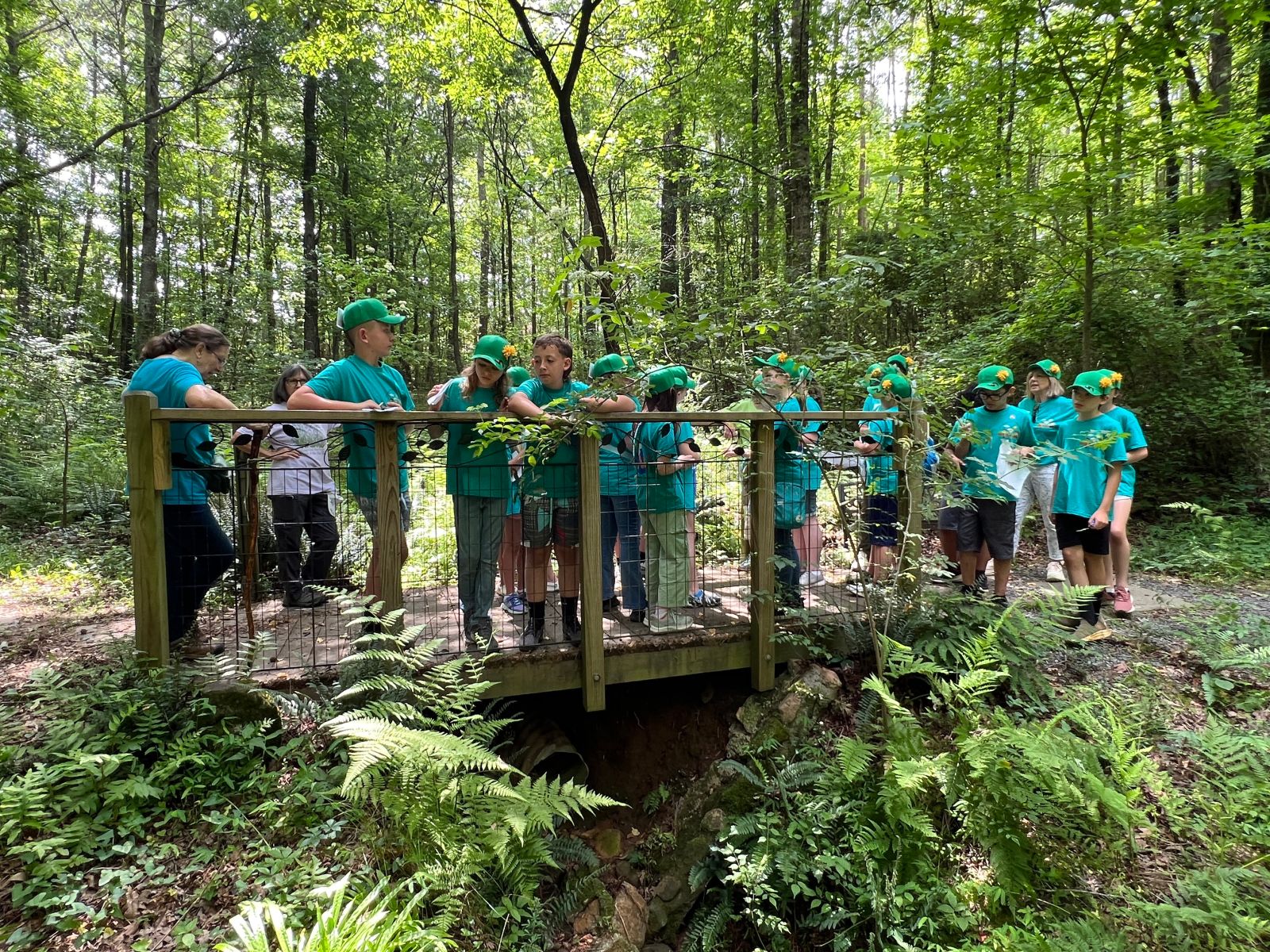
On June 4 volunteers from the West Georgia Chapter hosted over 50 elementary school students as part of Camp Dirty Knees, a program of the Carroll County Master Gardeners. The 3-day camp is intended to get children interested in gardening, and each session includes a morning at Buffalo Creek, a GNPS restoration site, learning about native plants. Chapter volunteers took the kids on a tour of the site while teaching them about several common plants. Each child was then allowed to choose a potted native plant (supplied by the Chapter) to take home. Many thanks to the Chapter members who participated in this program to help spark the children’s interest in nature.
Campers learn about native ferns at the Troll Bridge at Buffalo Creek. Photo credit: Frank Bennett
Bog Gardens Program, August 19
The West Georgia Chapter’s August 19 meeting will feature a presentation on bog gardens and carnivorous plants by well-known local expert Robert Barr. Robert has raised carnivorous plants for many years and has authored articles about them in Carnivorous Plant Newsletter and other publications. Attendees at the chapter’s April plant sale had an opportunity to admire some of the gorgeous Sarracenia (pitcher plants) and other carnivorous plants that came from Robert’s nursery. There will be a meet and greet with light refreshments at 6:30 p.m., followed by the program at 7:00 p.m.
Blue-eyed Grass Summer Shirts
Summer styles are in! Help us spread the word about this awesome native plant by wearing it. Browse our online store for a variety of styles and colors. Each design has both 100% cotton and 60/40 cotton poly blends available - click on “size and fabric info” on each product’s page for the specific details.
Insert Button: Shop Now https://www.bonfire.com/store/georgia-native-plant-society-shop/