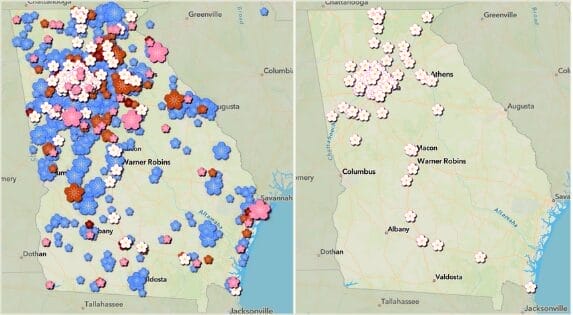
We are excited to share that GNPS certified habitats and educational gardens are now displayed on the Georgia Pollinator Partnership map, or the “GAPP map.” The mission of the Georgia Pollinator Partnership is to create and restore viable pollinator habitats around Georgia for butterflies, bees, moths, bats, hummingbirds and other beneficial animals by educating audiences about pollinator decline and promoting the use of pollinator gardens as a solution. As a GAPP partner, GNPS promotes our habitat certification and restoration programs through this map and provides online educational materials on the GAPP website hosted by the UGA State Botanical Garden of Georgia. Click here to view the GAPP map. Different layers can be turned on and off so you can view the different types of pollinator gardens in the network. GNPS habitats are indicated by a white flower.
Habitat loss is one of the leading causes of decline for native pollinators globally. By mapping pollinator gardens, partners within GAPP can better track the types of pollinator resources available across Georgia. You can help us fill the “GAPP” by creating pollinator habitat in your yard or neighborhood. The GNPS Habitat Certification program offers a list of criteria and guidelines that can be followed to develop your garden. The program offers both silver and gold certification. If your property doesn’t yet qualify for GNPS certification, you can check out the other yard recognition programs on the map as a starting point. For pollinator gardens in public areas, GNPS offers the Educational Garden recognition as a part of its larger restoration program. Educational Gardens demonstrate an array of native plants in a garden setting in order to educate the community, and qualifying projects receive small grants to purchase plants. When you qualify for either of these GNPS programs, you have the option to display the general location of your certified property on the GAPP map.
GNPS would like to extend its appreciation to the GAPP partners and Georgia Department of Natural Resources staff who have dedicated their time to developing this valuable resource.