Vote for the 2026 GNPS Plant of the Year
Each year, we celebrate one special native plant by selecting it as GNPS Plant of the Year (POY). The six nominated plants are featured below. Online voting is EASY. Logging in as a GNPS member will no longer be required. The primary member of each active memberships will receive an email with the following link to the voting page. They must use that email address (where they received the message) to vote, and it can be used only once (i.e., sub-members of a group membership cannot vote, but can provide their input to the primary member).
https://www.rcv123.org/ballot/X4g94cRvwWPP3C99G34P8MRQ
Or use this QR code:
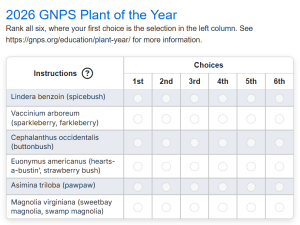
See the preceding post for information about ranked choice voting, to be used for the first time this year for Plant of the Year. The voting page will have a form similar to the one below. Members should rank their plants in order and press the submit button. Voting will take place from November 5-30.
Cephalanthus occidentalis
Common names: Buttonbush
Family: Rubiaceae
Plant type: Shrub
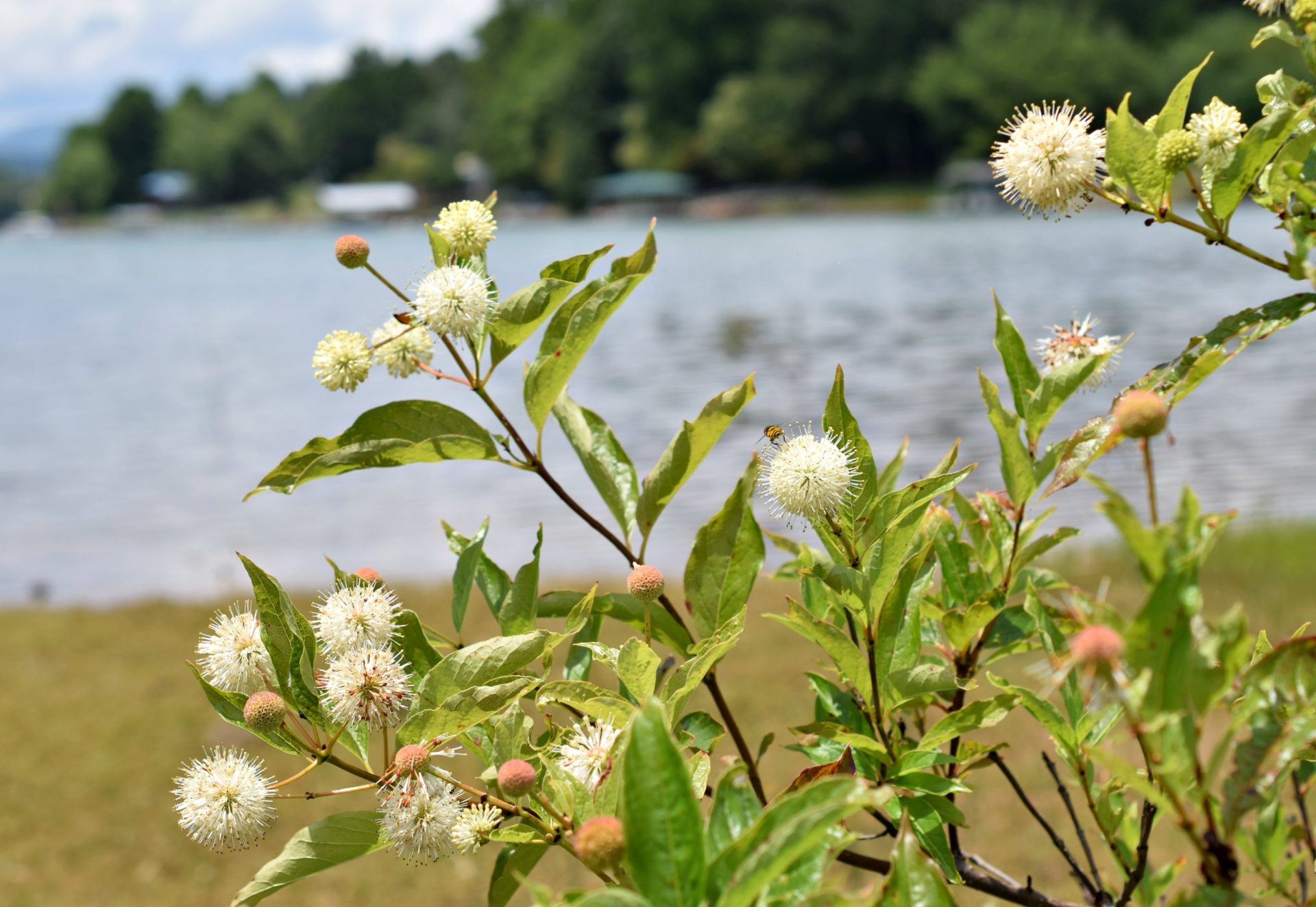
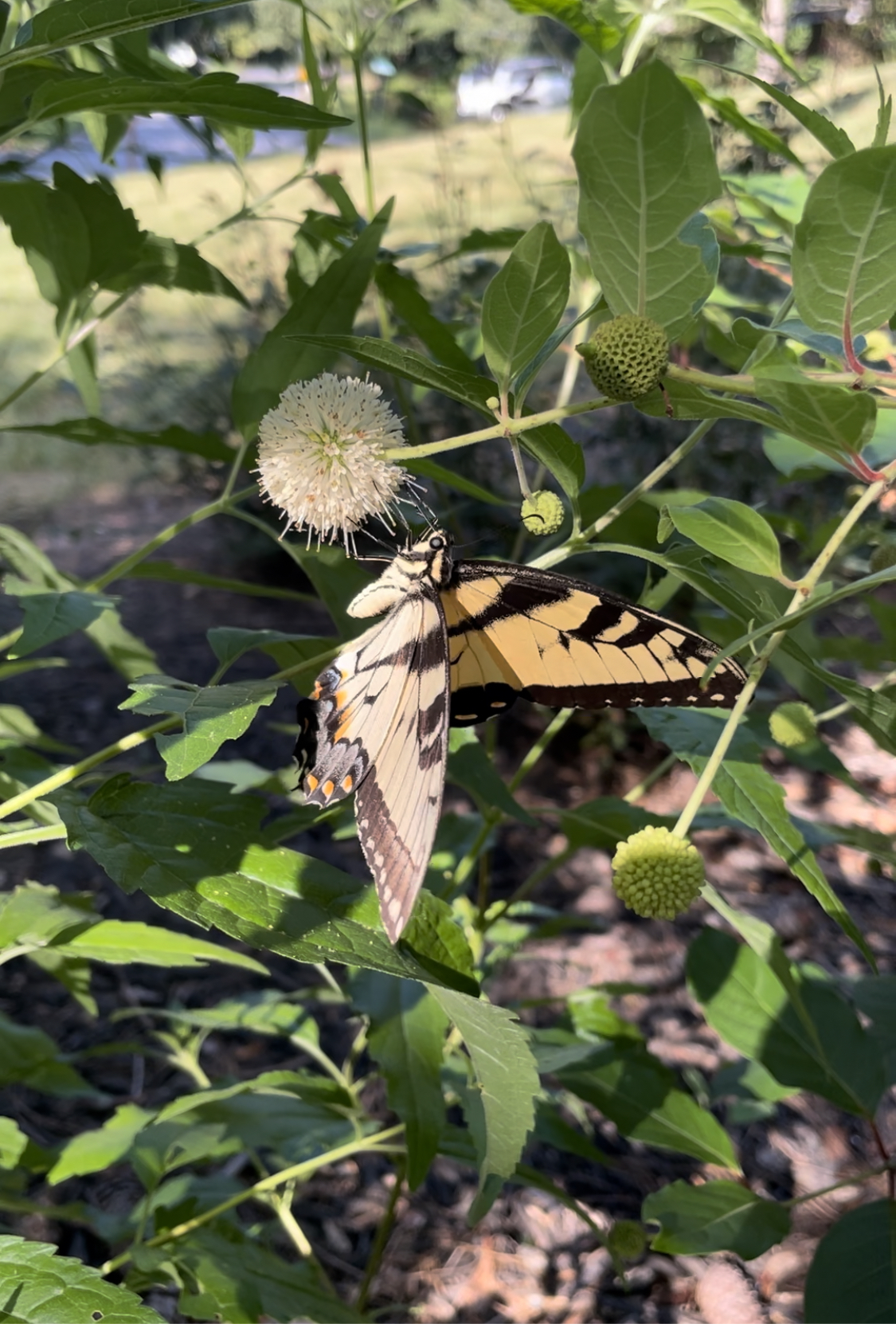
Buttonbush (Cephalanthus occidentalis) is a deciduous shrub that thrives in wet soils, growing naturally in swamps, bottomlands, and along streams and lakes. It is multi-stemmed, and can grow up to 20’, but generally reaches 4’-12’ tall. The leaves of buttonbush are 2-5” long, ovate-oblong in shape, medium green on top, lighter green underneath, and opposite, with some grouped in whorls of 3-4. Throughout the summer, clusters of fragrant flower heads extend on long stems from branch termini and leaf axils. Each head resembles a creamy white pincushion, covered in tiny, tubular flowers. The “pins” are styles, which poke out beyond the corollas, with rounded stigmas at the tips that are rich in yellow pollen–a feast for bees and butterflies. Hard, round, reddish-brown seed capsules, each containing 4 nutlets, appear in fall and persist throughout the winter. These provide an excellent food source for waterfowl, particularly Wood Ducks. Native Americans used leaves, bark and roots medicinally. However, the leaves are poisonous to livestock, and all plant parts contain glycosides that are known to be toxic to humans. Caution should be used when consuming any part of this plant. Buttonbush is a wonderful plant for wetland gardens, or restoration projects in bottomlands and floodplains. It can grow in sun or shade, and unlike many species, will tolerate prolonged submergence.
Credits: Text by Valerie Boss. Photos by Ellen Honeycutt and Wendy Brunson.
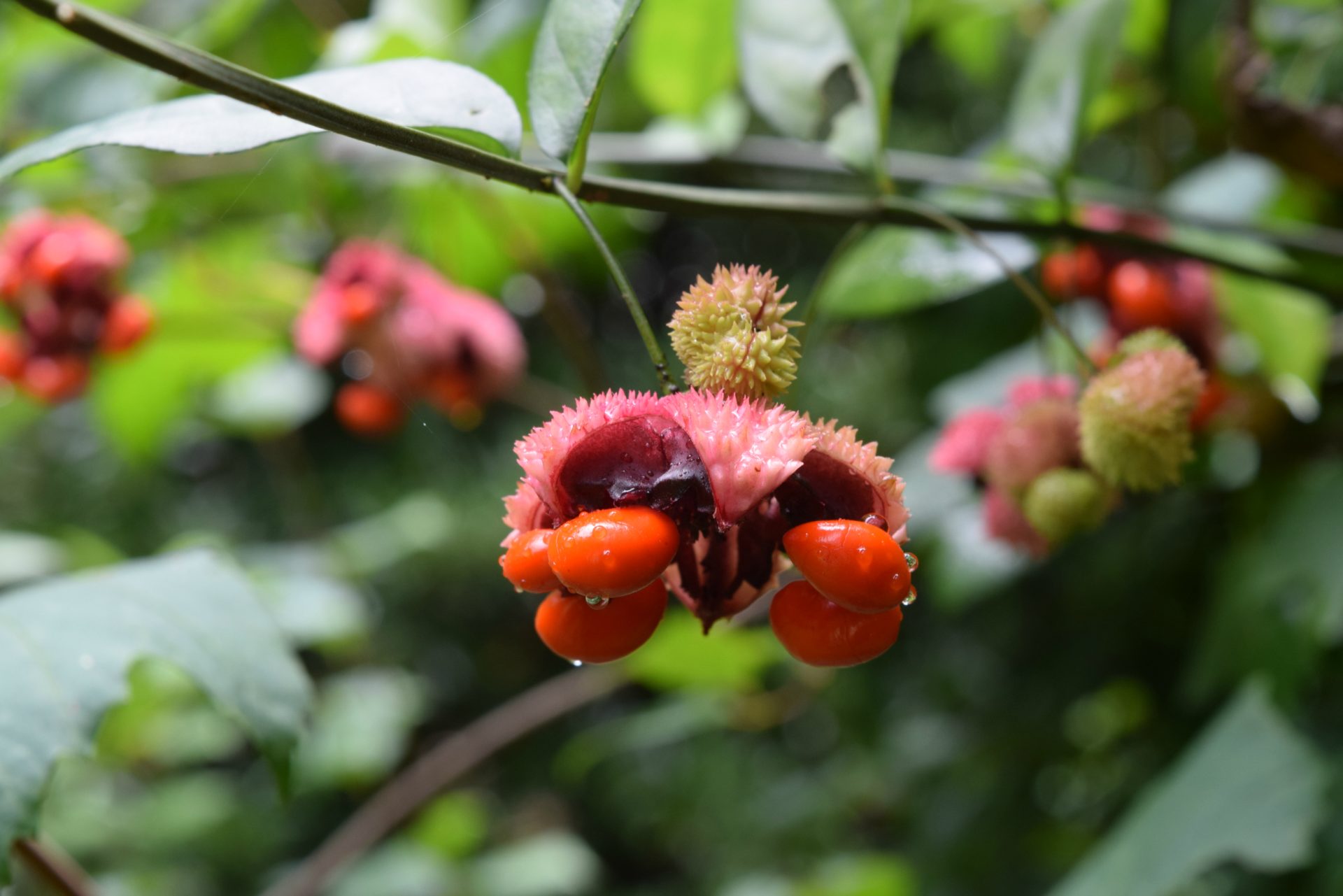
Euonymus americanus
Common names: Hearts-a-bustin’: strawberry bush
Family: Celastraceae
Plant type: Shrub
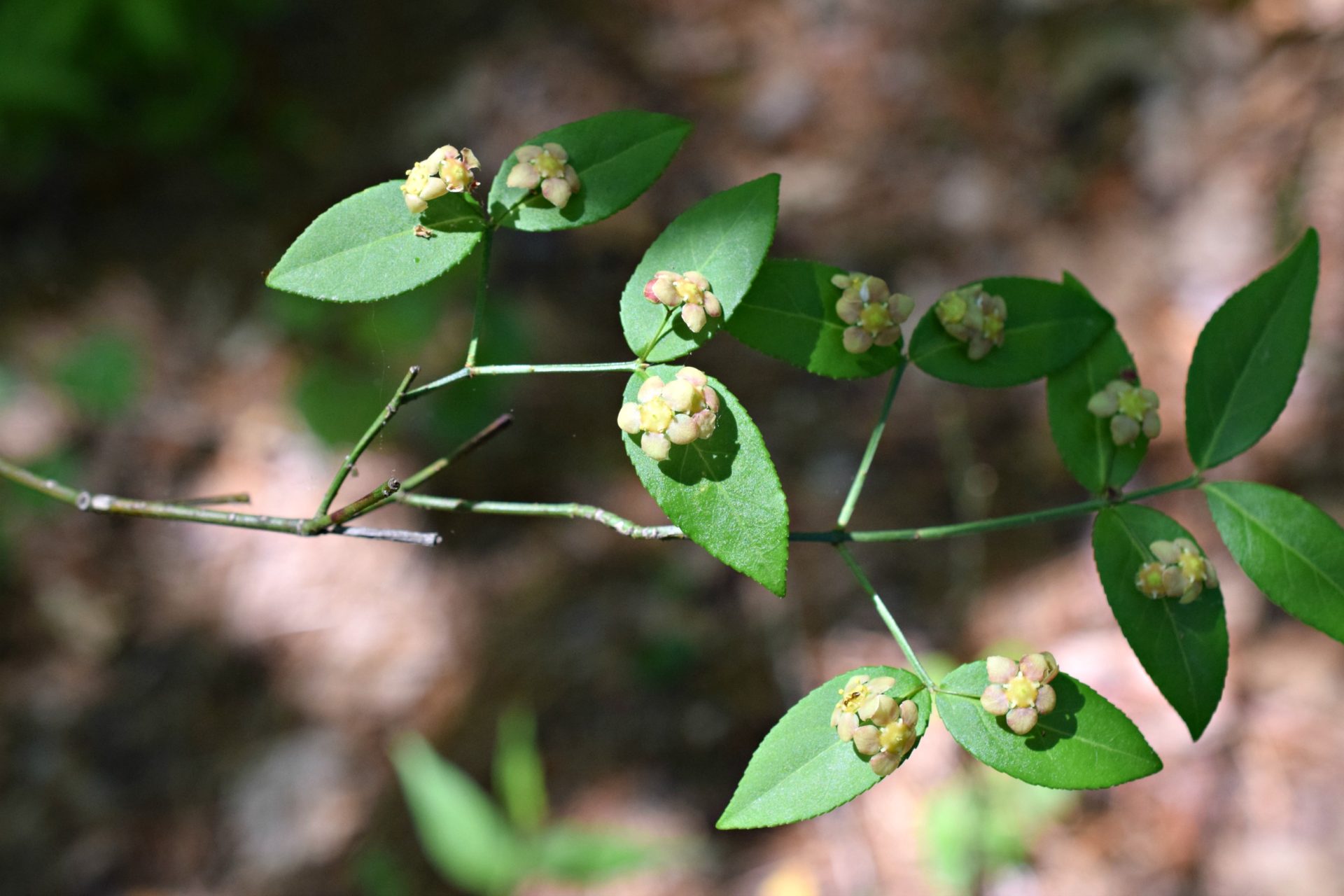
Hearts-a-bustin’ (Euonymus americanus) is an open, sprawling understory shrub. Its multiple dark green or purplish-green stems grow to about 6’ in length. They tilt over when young, but become more erect and woody with age. Opposite, fine, square-edged branches stick out stiffly from the main stems, each bearing a terminal pair of deciduous leaves. The leaves are 2-5” long, ovate or lanceolate, with pointed tips. In spring, the species exhibits modest little greenish-yellow flowers that grow on short stalks above the leaves. Although this plant isn’t a remarkable bloomer, it certainly puts on a show in the fall. In September and October, when the leaves are still green, unusual red seed pods resembling warty strawberries (albeit poisonous ones) rupture to reveal 4 brilliant vermillion seeds that feed the birds throughout the winter. The seed pods give the plant its common names: hearts-a-bustin’ and strawberry bush. As winter nears, the leaves turn red, adding to its late season interest. Hearts-a-bustin’ is easy to grow and tends to sucker, which also makes it simple to propagate. Naturally growing in woodlands, it likes partial shade and is hardy in most soils. The species is low maintenance once established, although not deer resistant.
Credits: Text by Valerie Boss. Photos by Ellen Honeycutt.


Asimina triloba
Common names: Pawpaw
Family: Annonaceae
Plant type: Tree
Pawpaw (Asimina triloba) is a deciduous understory tree known for its large, tasty fruit—the biggest edible fruit indigenous to North America. The species is a member of the Annonaceae family, which includes tropical fruit-bearing trees such as cherimoya and various custard apples. Asimina is the only genus that grows in temperate regions. Pawpaw trees can reach 35 ft tall, although they are typically shorter in the understory. They have alternate, medium green, oblong, simple leaves that turn bright yellow in the fall. Trees flower in early spring, before the leaves emerge. The flowers are about 1-1.5” across, single, 6-petaled (3 inner and 3 outer), and dark maroon-brown. Their fragrance is unpleasant to humans, but it attracts beetles, flies and two lepidoterans: zebra swallowtail (Eurytides marcellus) and pawpaw sphinx moth (Dolba hyloeus)–pawpaw is their larval host. Pawpaw flowers have male and female parts, yet they do not self-pollinate. Pollen from one tree must fertilize a genetically different individual. Since pawpaw trees sucker to produce clonal colonies, genetically distinct plants can be far apart in the wild. Pawpaw fruits in the autumn, and its eponymous fruit can be green, yellow, or coppery. When ripe it is sweet, about the size of an avocado (but more oblong), and soft, not firm. Pawpaw trees typically grow on rich, moist hillsides or ravines in partial sun. Plant them in partially shaded areas where they have room to spread, or else plan to cut the suckered clones. Once established, they thrive with very little attention.
Credits: Text by Valerie Boss. Photos by Ellen Honeycutt.
Vaccinium arboreum
Common names: Sparkleberry; farkleberry
Family: Ericaceae
Plant type: Shrub
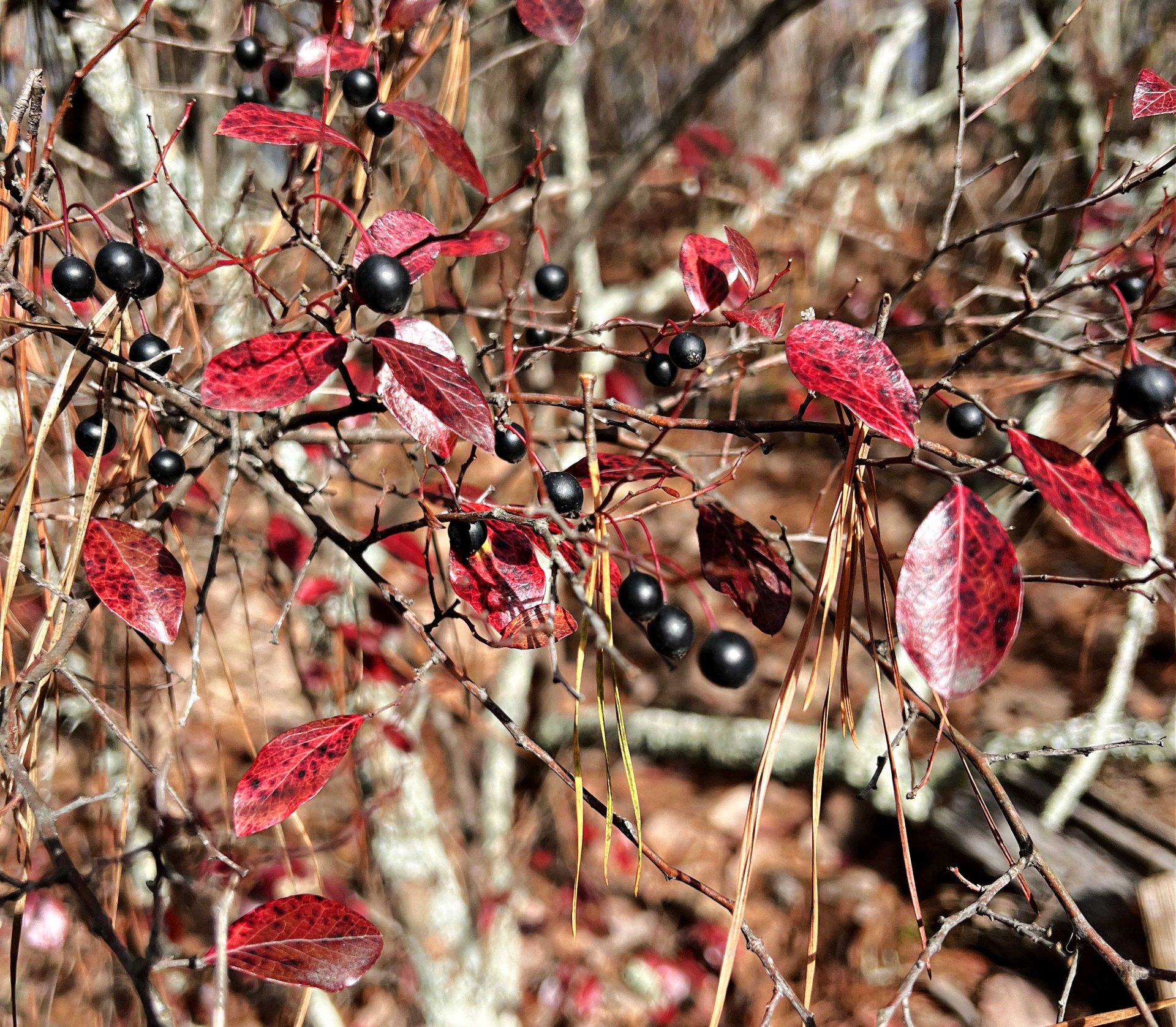
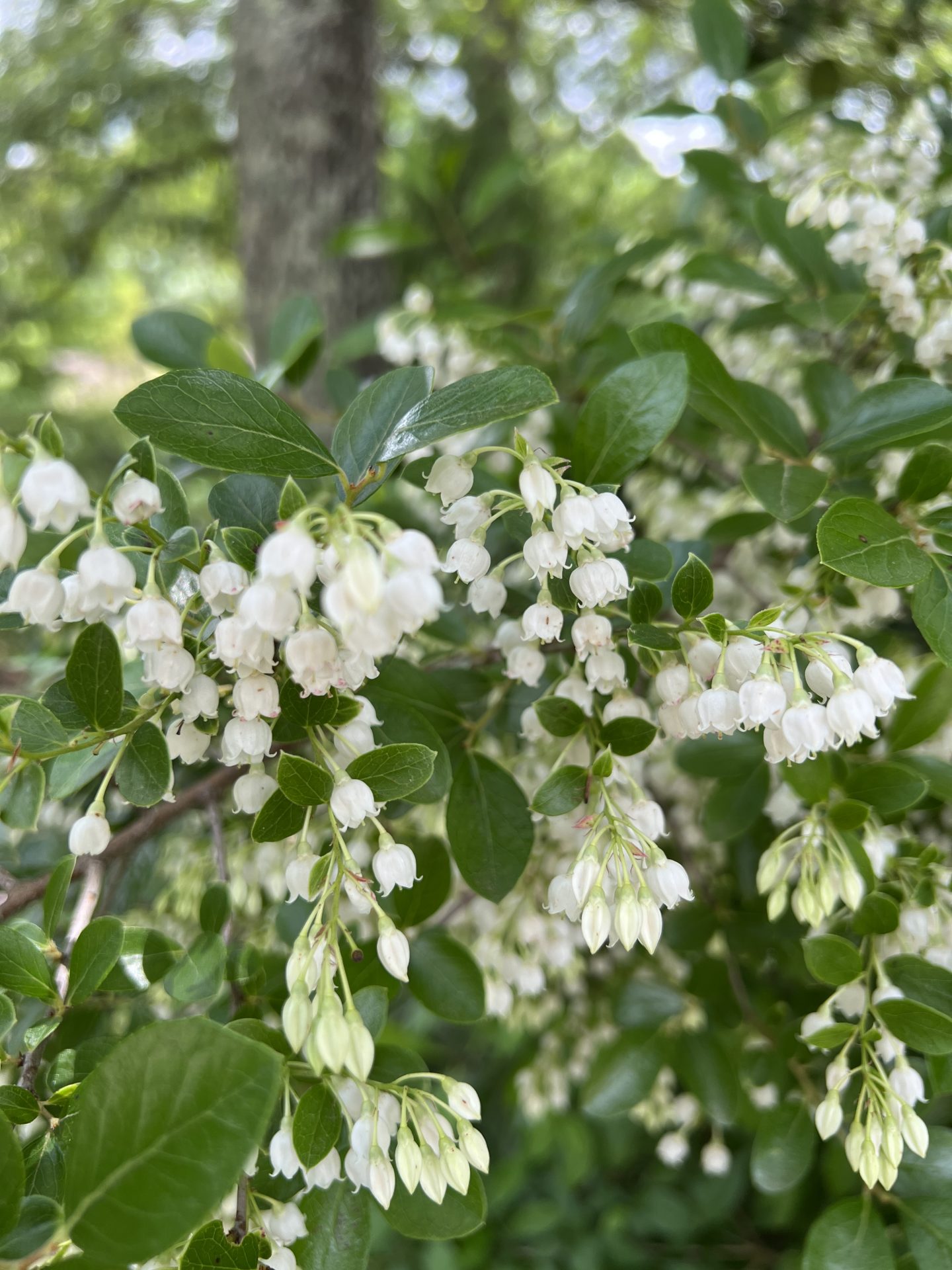
Sparkleberry (Vaccinium arboreum) is the tallest plant in the blueberry/huckleberry genus. It typically reaches the height of a small tree (10-15’), hence the species name “arboreum”, and can grow up to 30’ tall. Sparkleberry has distinctive bark– grey on small branches and young trunks, grey-to-reddish brown and peeling vertically on mature trunks, and often sporting patches of lichen or moss. The branching pattern can be very irregular. Sparkleberry leaves are alternate, roundish-oval with rounded ends, glossy, dark green in spring/summer, and maroon in fall. The can either drop in late fall, or persist through the winter to be replaced by new growth in spring. Sparkleberry flowers briefly, for only about 3 weeks in May. The flowers, growing on racemes, are abundant, white, bell-shaped (inverted), and about 1/3” long and wide. They support many insect pollinators, including at least 6 bee species. Swallowtail butterflies consume their nectar, and the plants are larval hosts for the brown elfin butterfly (Callophrys augustinus). Spring flowers transform to round, green berries that ripen to dark purple-black in the fall. The berries are edible, but very seedy. People don’t generally find them palatable, but animals love them. The natural habitats for sparkleberry are rocky outcrops, cliffs, and rocky or sandy woodlands with acidic soil. They are a common sight on Georgia’s granite balds, such as Stone Mountain and Arabia Mountain. In gardens, plant them among rocks in areas that get partial shade or morning sunlight, but not full afternoon sun. Once established, sparkleberries are drought-tolerant.
Credits: Text by Valerie Boss. Photos by Ellen Honeycutt.
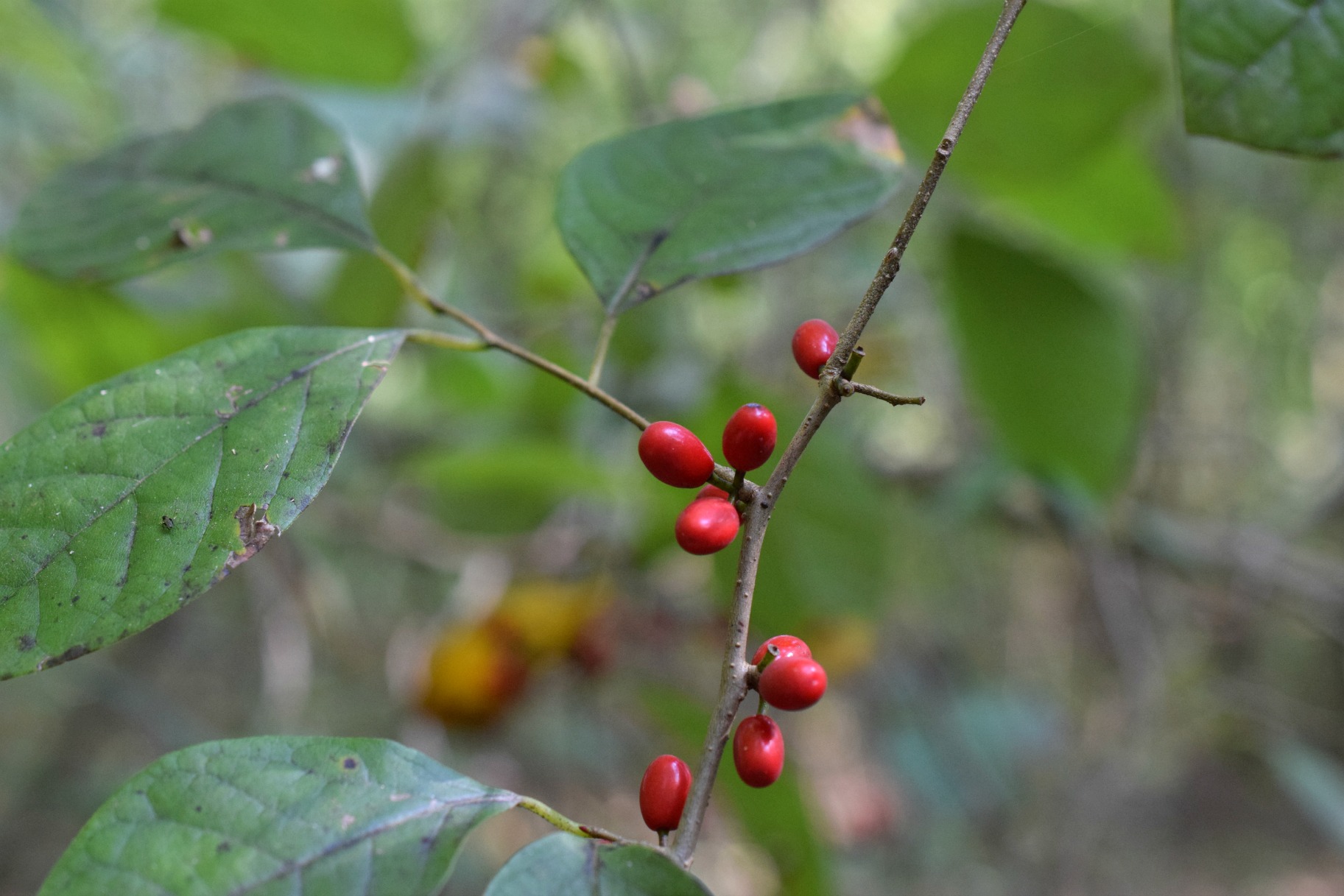
Lindera benzoin
Common names: Spicebush
Family: Lauraceae
Plant type: Shrub
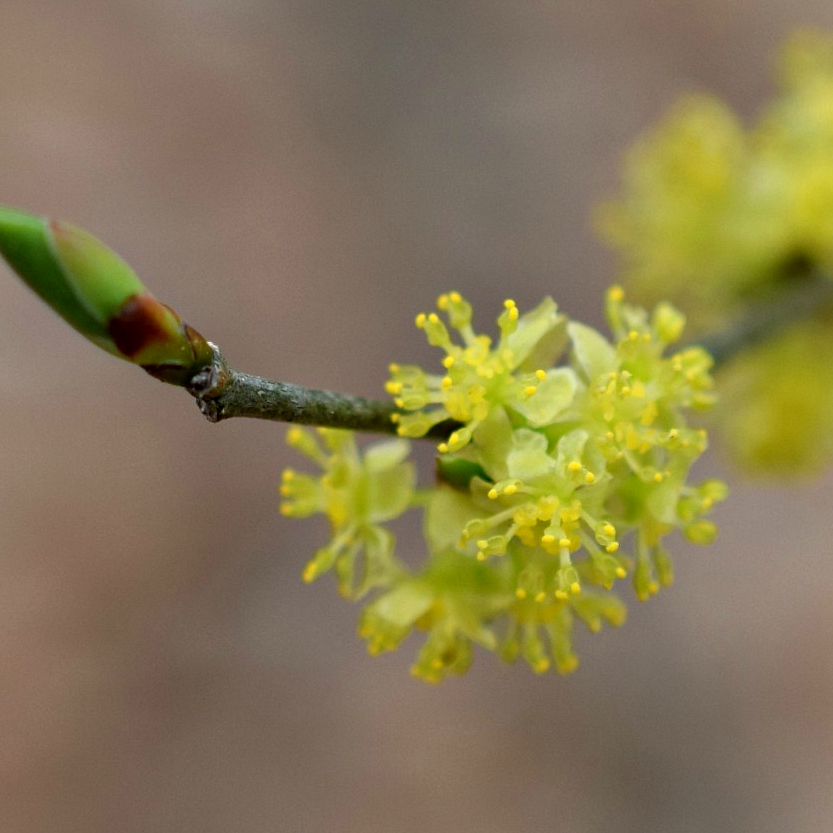
Spicebush (Lindera benzoin) is an aromatic shrub, about 6-12’ tall and nearly as wide, either single or multi-stemmed, exhibiting an open, graceful branching pattern. Its leaves are ovate, medium green (slightly lighter on the underside), up to 6” long, with prominent veins and smooth edges. The species is dioecious—plants are either male or female. In early spring, before the leaves emerge, clusters of tiny yellow flowers appear along the branches next to the axillary leaf buds. In fall, female plants produce red “berries” (actually drupes), provided that there is a male plant nearby to pollinate the flowers. Spicebush is an excellent plant for wildlife. Its pollen feeds insects in the spring, and its drupes provide food for the birds in the fall. It is also a host for Eastern and spicebush swallowtail butterflies. All parts of spicebush—bark, leaves, drupes—contain fragrant, volatile oils. Like many aromatic plants, it was used medicinally and as a culinary spice by Native Americans, including the Cherokee and Creek tribes. The most common medicinal use was to treat fevers. The drupes have a peppery taste and may appear in recipes online (however, they have no FDA status, either as a safe food or not). In the wild, spicebush grows in partial shade along stream edges and in moist forest soils. It should grow well in shaded gardens, provided that is does not dry out. It has beautiful yellow fall color and is easy to transplant.
Credits: Text by Valerie Boss. Photos by Ellen Honeycutt.
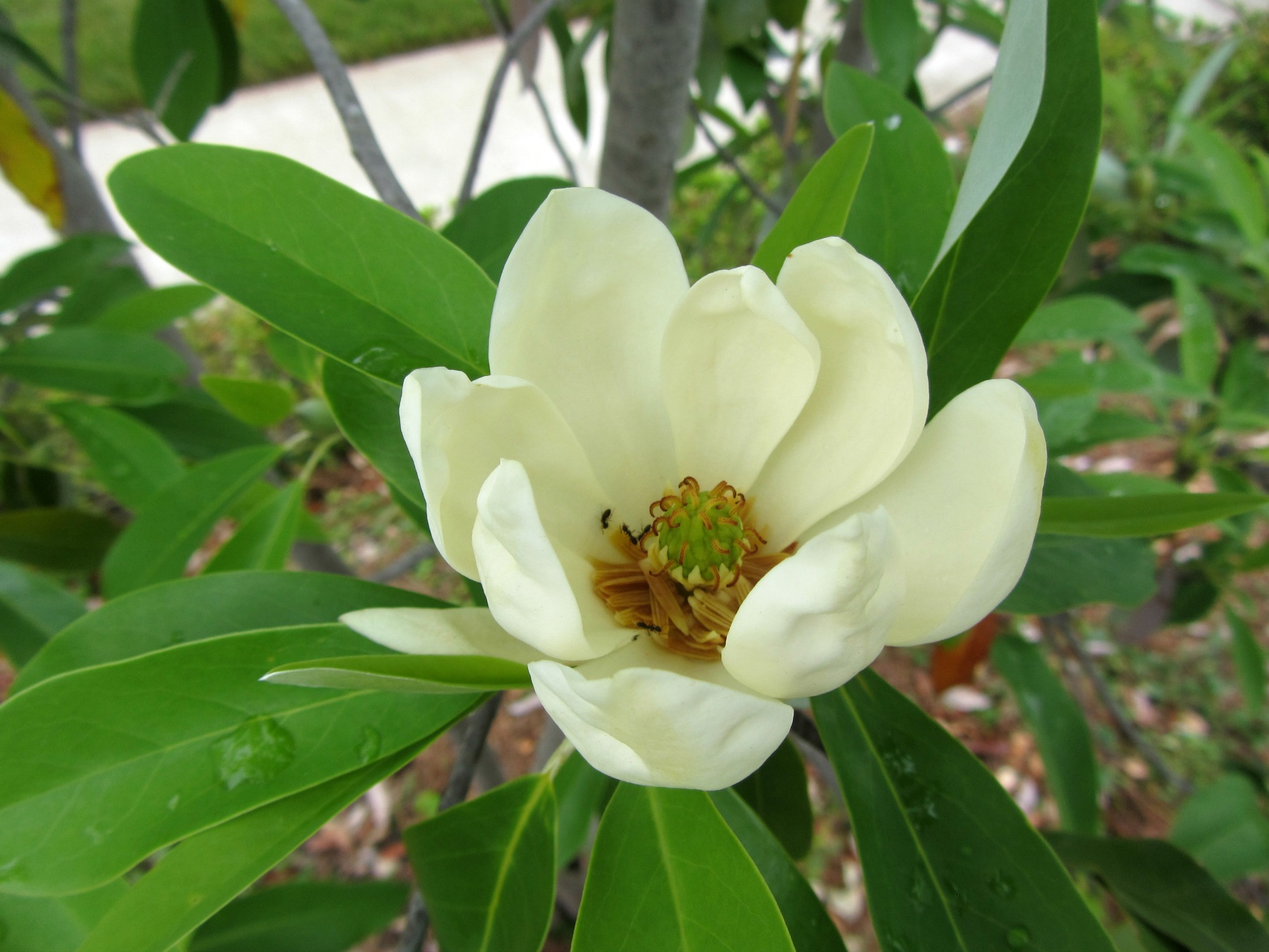

Magnolia virginiana
Common names: Sweetbay magnolia; swamp magnolia
Family: Magnoliaceae
Plant type: Tree
Sweetbay magnolia (Magnolia virginiana) is a semi-evergreen tree that thrives in swamps, bogs, and bottomlands, although it can also live in moist woodlands. It typically reaches 10-50’ tall, and its growth habit can either be that of a single-trunk tree or a tall shrub with multiple trunks. Its oblong (3-6” x 1-2.5”), leathery, alternate leaves are dark green, with a pronounced central vein, resembling those of the more familiar Southern magnolia (M. grandiflora). However, the undersides of sweetbay magnolia leaves are pale–almost white. It blooms in summer, producing individual flowers at the branch termini. Each flower is cup-shaped, 3-6” across, about 2” deep, and fragrant. Flowers have 9-12 ivory petals, surrounding small conical greenish-yellow centers. Pistils and stamens jut out from the central cones, forming spiral rings of little curlicues. Pollinated by beetles, sweetbay magnolias produce conical, red, aggregate fruits in the autumn. Their seeds are high in protein and are eaten by birds and squirrels. The Eastern tiger swallowtail butterfly uses sweetbay magnolia as its host plant. Although the species is susceptible to several fungal diseases, the hardy, long-lived plants generally survive. With lemony-scented flowers and colorful fruit, sweetbay magnolia makes a lovely addition to a garden, provided that it gets sufficient moisture and is planted in acidic, not alkaline, soil. The GNPS is currently advocating for this species to replace the non-native Cherokee rose as Georgia’s state plant.
Credits: Text by Valerie Boss. Photos by Ellen Honeycutt.