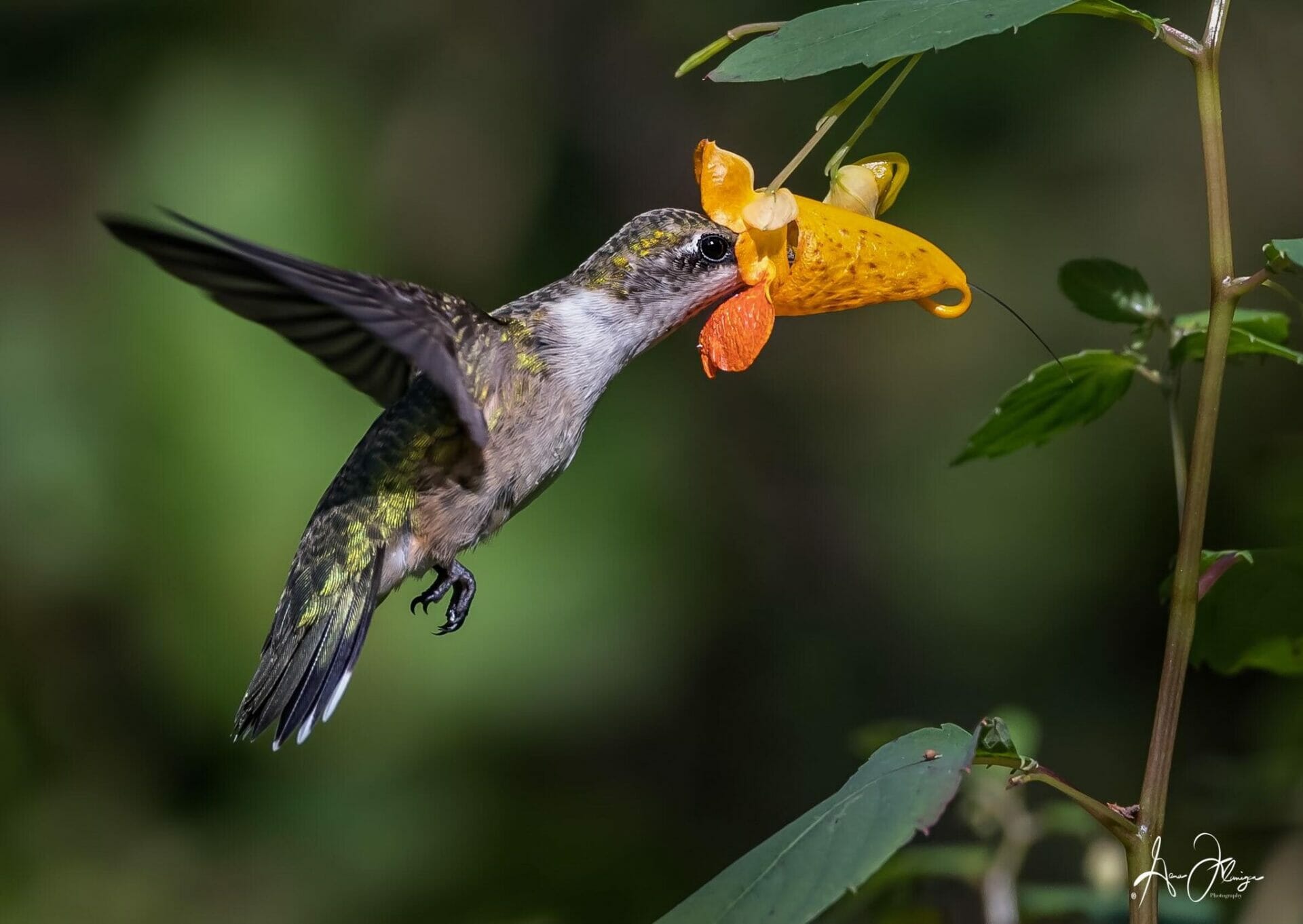
Ruby-throated hummingbird visiting orange jewelweed (Impatiens capensis). Photo by Gena Flanigen.
Annual plants don’t get as much attention as longer-lived plants like perennials, shrubs, trees, and vines. They do have an important role to play in the ecosystem, and our native species of Impatiens are no exception. People are often surprised to know that we have native Impatiens; they are quite taller than the annual bedding plant commonly known as impatiens. Still, they share characteristics of having succulent (juicy) stems and enjoying a preference for moist, part-shade areas.
Naturally, you’ll find our two species of Impatiens in moist-wet areas where their ability to create large amounts of seed, a common trait for annuals, allows them to create dense stands of vegetation, with plants 2-5 feet tall. These plants enhance streamside shade, provide nectar for hummingbirds and bees, as well as provide food for several moth caterpillars and critters that eat the seeds. Deer may browse on it. Its dense growth also helps to shade out weed species such as garlic mustard and stiltgrass.
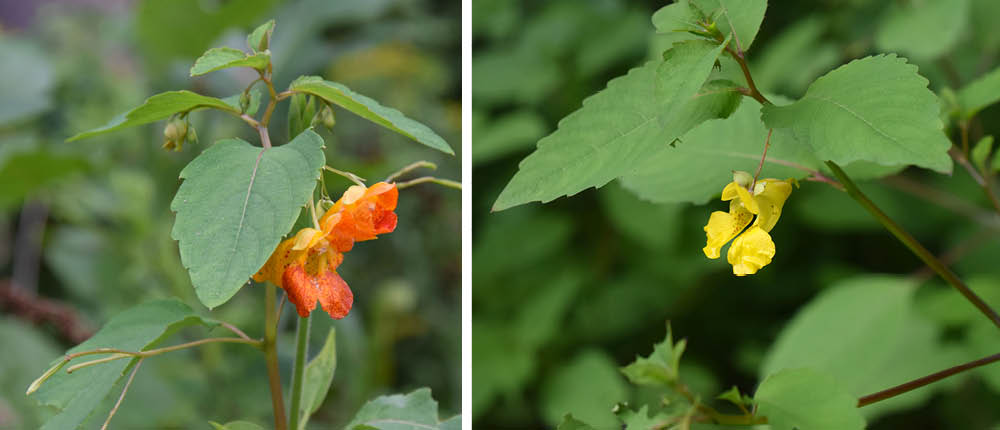
Left: Orange jewelweed Impatiens capensis). Right: Pale jewelweed (Impatiens pallida).
In Georgia, orange jewelweed (Impatiens capensis) is the more widely distributed species while the pale jewelweed (I. pallida) is only found in the North Georgia Mountains. The flowers are conical in shape and are actually composed of 5 petals and 3 sepals (one sepal helps to form the nectar pouch). They dangle from thin pedicels. In addition to these flowers, the plant may also produce insignificant, cleistogamous flowers (self-pollinating) that produce fertile seed without the help of insects.
The common name jewelweed is thought to come from the shimmering look of the leaves when flecked with water; another name is touch-me-not, a reference to the spring-loaded action of seed pods that eject their ripe seeds when touched. Spotted jewelweed, another common name for the orange-colored species, refers to its red-flecked petals. Of course, many people know it as a poison ivy remedy. The juices from its stem can be made into a salve for itchy spots.
Since this plant is an annual, it is rarely found at plant sales. Friends who have it are often willing to share and seeds can be found online. Once you have it, you’ll find it popping up in new places where conditions are favorable. I’m finding it in a lot of my pots this year after having just one plant last year. The hummingbirds are really appreciating it!