Spring 2020 Plant Sale

The Georgia Native Plant Society hosts a Fall and a Spring plant sale each year providing the public and our members an opportunity to purchase plants native to Georgia. General information, including details of past sales is at our archived plant sale page. Our Spring 2020 sale has been cancelled. See updates in the blog posts below.
Plant Sale Updates & News
GNPS Statement on Cultivars of Native Plants
The GNPS Board of Directors has created the following statement on using cultivars of native plants. It includes some background information to set the context for it. Following the statement are some resource links to provide some of the research regarding cultivars.
What is a cultivar?
A cultivar (short for cultivated variety) is a selection of a plant that has been patented and propagated through cultivation, most often through cuttings, division, or tissue culture and sometimes selected seeds usually through controlled pollination of the parent plant. In order to preserve the traits for which they were selected, most cultivars are clones of the original plant. For native plants, some people refer to these as ‘nativars’ but they are the same concept as the broader term ‘cultivar.’ Cultivars can be hybrids or they can be selections of the species found in a population of plants. For comparison, the term ‘straight species’ refers to the plant as originally found in the wild.
Why are they created?
Nurseries and breeders select plants for cultivars because of a desirable trait such as: a more compact size; a particular flower color; more blooms per plant; double blooms; larger blooms; disease resistance; unusual leaf color; larger fruit; etc. The selected plant might have been deliberately bred in a nursery or selected from a wild population.
How do you recognize that a plant is a cultivar?
Proper labeling on the plant helps you recognize a cultivar. Straight species plants have the scientific name such as Phlox paniculata while cultivars have a name in single quotes that follow: Phlox paniculata ‘David’; a hybrid cultivar should include an ‘x’ in the name to denote that two species were crossed: Phlox x ‘Wanda.’ Once you identify that a plant is a cultivar, search engines (such as Google and Bing) can help you research the plant to understand why it was selected and/or the species used to create it (if it is a hybrid). Further use of the word ‘cultivar’ here applies equally to hybrid and non-hybrid cultivars of native plants.
Are they appropriate for use?
Cultivars can have a place in designed landscapes/gardens when selected carefully and used in conjunction with straight species plants. For example, cultivars selected for compact form allow smaller gardens to use plants that might have been too large for the space. When choosing to use a cultivar, it is important to understand the traits of the plant and how those match the goal of the garden. For example, plants bred for double blooms are less productive for pollinators and would not be a good choice for a pollinator garden.
Cultivars should not be used in Georgia restoration projects/areas. Straight species, preferably sourced from regional Georgia populations, should be used.
What are some of the concerns with using them?
The concerns are two-fold: loss of genetic diversity and reduced ecosystem services that plants normally provide. Since cultivars are clones, using them exclusively reduces the genetic diversity of the species, diminishing the biological heritage of the species and opening the potential for biological decline of it.
To fully appreciate how a cultivar can reduce a plant’s benefit to the ecosystem requires a bit of research about the cultivar. Scientific research by Doug Tallamy and Annie White have helped us understand two areas of alteration that affect a plant’s ability to provide ecosystem services to native insects: 1) forms that alter the leaf color (particularly dark colors are less attractive to insect herbivores like caterpillars); and 2) forms with double blooms provide less nectar and pollen to pollinators while the research on flower color form continues.
We recognize that while we have better information than before on how insects interact with native cultivars, the research on them will continue and will likely improve our understanding even further in the future.
Our statement about using them:
The Georgia Native Plant Society recognizes that balanced use of some native cultivars in designed landscapes can provide specific functionality (e.g., compact size) and landscape beauty to showcase native plants and still support wildlife. We do not recommend that cultivars be used in Georgia restoration projects. Restoration projects should only use straight species plants that are as locally sourced as possible, preferably from seeds or plants in the same ecoregion.
When used in designed landscapes, cultivars require some additional considerations. We recommend that straight species of plants also be included in designs when cultivars are used. For example, when using butterfly milkweed Asclepias tuberosa ‘Hello Yellow,’ one should also include the straight species Asclepias tuberosa. If observation in the garden later finds that insects are less attracted to the cultivar, consider removing it in the future and replacing it with straight species. We recommend a healthy balance of straight species and cultivars when cultivars are chosen in the design.
We encourage people to ask for straight species plants in nurseries to encourage more nurseries to grow or stock more genetically diverse plants. When you purchase these plants from nurseries, particularly small nurseries that grow plants from local seed, you encourage the propagation of them and the preservation of biodiversity.
Resources:
Baisden, Emily C., Tally, Douglas W., Narango, Desiree L., Boyle, Eileen. 2018. “Do Cultivars of Native Plants Support Insect Herbivores?” American Society for Horticultural Science
Marinelli, Janet. 2016. “Native, or Not So Much”, National Wildlife Federation
Rodomsky-Bish, Becca. 2018. “Nativars (Native Cultivars): What We Know & Recommend”, Habitat Network/ The Nature Conservancy/The Cornell Lab
White, Annie. 2016. “Nursery to Nature: Evaluating Native Herbaceous Flowering Plants Versus Native Cultivars for Pollinator Habitat Restoration” University of Vermont
White, Annie, 2020. ”How Native Plant Cultivars Affect Pollinators”, Metro Hort Group
*****
This statement can be found on the GNPS Education menu, under the GNPS Policy tab. Please use the link to that statement when referencing it. Direct link: https://gnps.org/education/gnps-statement-on-cultivars-of-native-plants/
GNPS Transitions: State Board and Atlanta Chapter
A number of communications have been shared with the membership over the last few months regarding the transition of the GNPS Board to a State Board. This will happen in January 2020 following the approval of new by-laws and the election of the new Board at our Annual Business Meeting on November 12th.
We’ve compiled a page of information to help members understand the background and the changes associated with this transformation. We’ve talked a lot about the goals for improving our impact in the state as a result of this change, but it’s important to realize the change on the members that were never associated with a chapter before in the Atlanta area. Members in the Atlanta area are particularly affected by the change in that these members now need to come together to create one or more new chapters to help keep education and events happening in their communities.
While developing the metro Atlanta chapters will be some work, we hope that it will be an opportunity to elevate existing members to leadership positions, to bring new local ideas to the organization, and to develop educational events closer to our members, especially given the challenges associated with driving in the metro area. A group of folks are already working on an educational event in Alpharetta.
At a chapter formation meeting we held in Dunwoody recently, we emphasized that there are no preconceived notions of where metro Atlanta chapters might form. Members have expressed interest in having chapters in metro-north, metro-east, and metro-south areas. People who step up to lead chapter formation activities are the ones who will determine where these initially form and where future meetings will be held. The Strategic Task Form Team is available to help facilitate the initial communications between members looking to organize. You may reach the Strategic Task Force via email: strategic@gnps.org and chapter questions may be directed to chapters@gnps.org.
Specifically, we can help in the following ways:
- Provide a list of existing members in the chapter area so you can reach out to them for events, board positions, and energy.
- Provide GNPS materials such as brochures for your events.
- Provide introductions to locations for meeting venues that we have worked with; also provide ideas for speakers and event topics.
- Provide publicity for your events through the website, emails, and our social media channels.
- Provide a quick-start chapter guide to help you come up to speed quickly.
In Memory of George Sanko
Kathryn Gable
I sit here under the eaves, sheltered from the rain, laptop in lap — hoping for inspiration from my garden to write an article on George Sanko for the GNPS Newsletter. HOW DO I BEGIN? Everyone knows by now that George abruptly departed this earth several days ago, just as unexpectedly as he did everything else. It’s as if on a whim, he immediately needed another garden to plant and he didn’t want to waste time telling us. He must have felt very confident that the staff (mostly volunteers) would take care of his prized collections at Georgia Perimeter College’s Decatur Campus, especially his piece-de-resistance, the internationally acclaimed Ferns of the World.
Always the ultimate botanist, the passionate teacher, the avid native plant collector who, by the way, referred to exotic plants as a “piece of crap,” George viewed any obstacles in his path as a challenge. Not even open heart surgery (not once, but twice) could thwart his dreams. In fact, legend has it that during his recovery, he walked into a classroom filled with students, while dragging an IV pole with fluids dripping through his vein. That definitely sounds like something he would do. More recently, when he no longer could hike the treacherous trails to botanize with friends and students, he would simply go along for the ride. Once at the appointed designation, George would unfold his chair, sit down at the beginning of the trail and patiently wait for the group’s return. His doggedness, an inspiration to all.
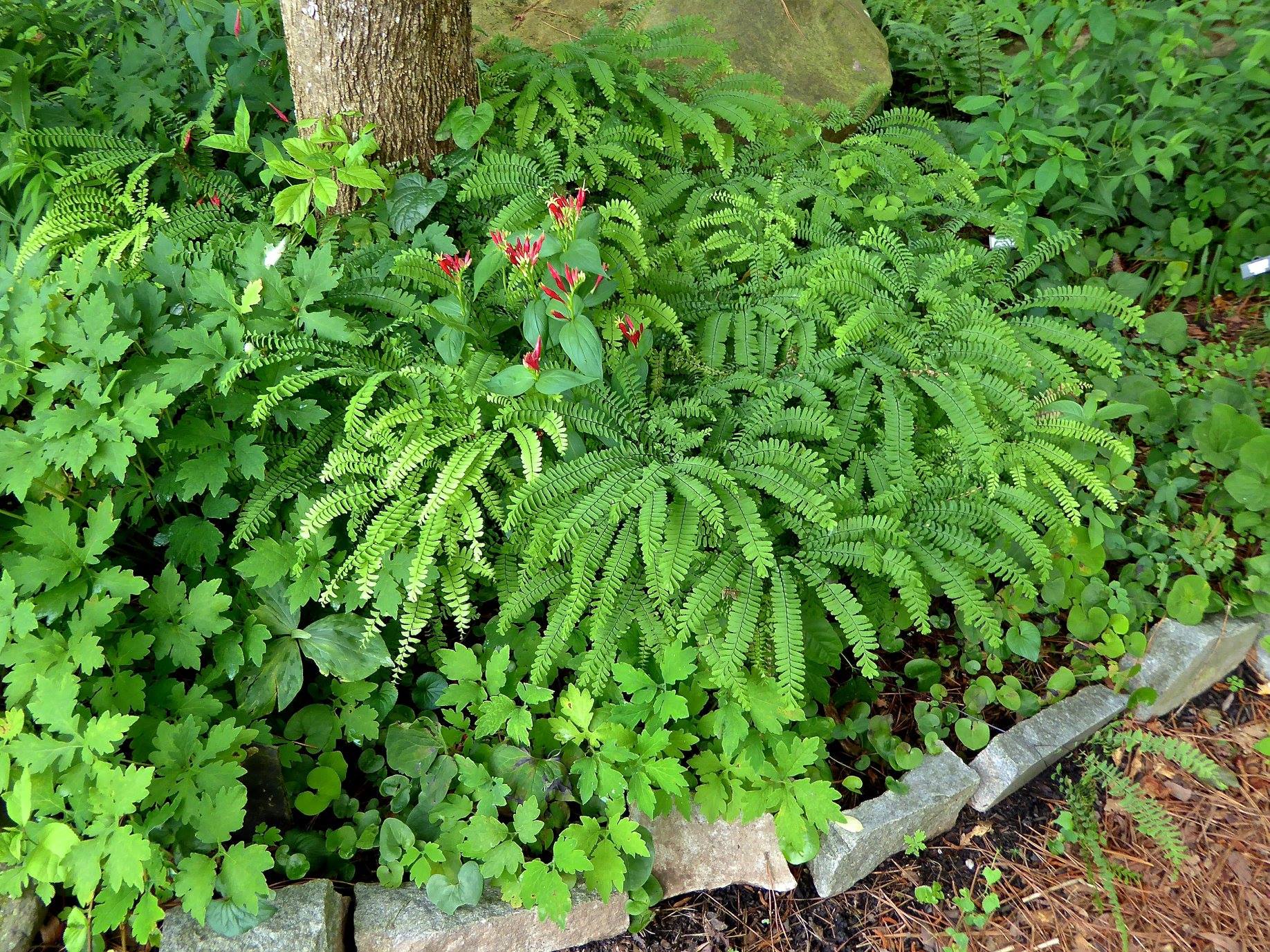
The rain, now a mere drizzle, sparkles on the blossoms of a Rhododendron viscosum. The leaves of a Magnolia macrophylla softly wave to no one in particular. Beneath it, a swath of Spigelia marilandica shimmers, all treasures from George. In closing, I can’t help but wonder how he would want me to end this article. Probably with a devilish smile, he would say something like, “That’s enough, Kathryn. Just say it was a good life. Then get back to the garden before the weeds take over.”

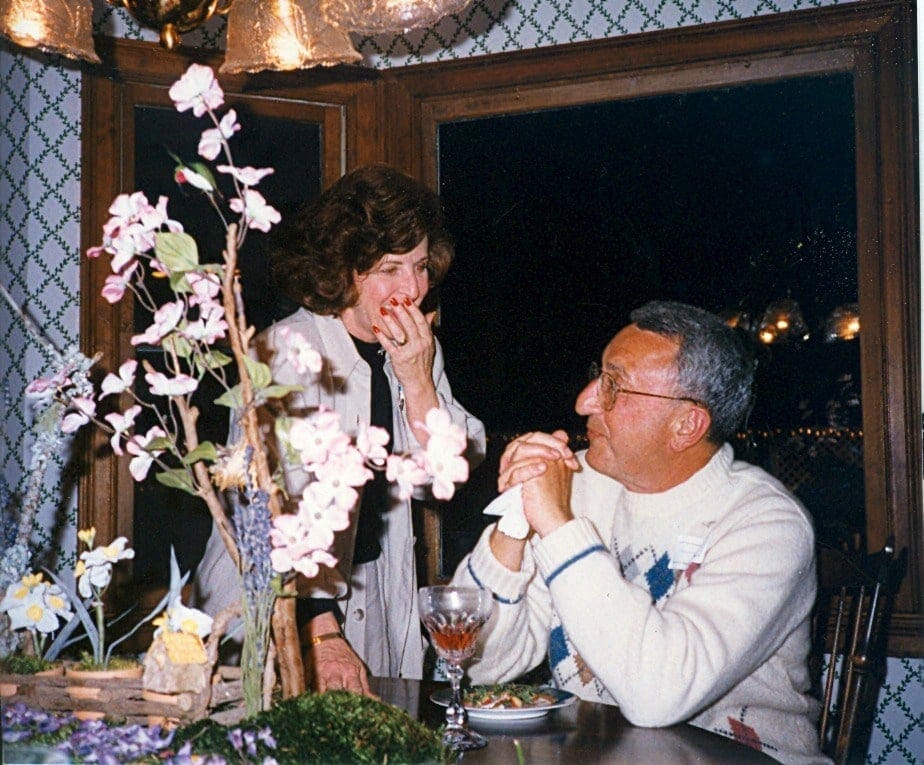
Top photo: Original members Jackie Fitts and George Sanko (see GNPS history). Middle photo: Ferns of the World garden. Bottom photo, clockwise from left: Receiving award from Cullowhee Native Plant Conference, Reflecting on his garden (photo credit Deborah Whitlaw Llewellyn), Ferns of the World sign with Shannon Carr Pable and Lori Prosser, and George at work.
GNPS Logo Trademark Approved at the Federal Level
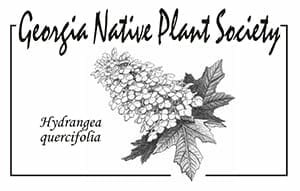
The logo of the Georgia Native Plant Society, designed by one of our dear founder members Linda Fraser almost 20 years ago, is naturally very precious to our Society, so when we learned of an attempt to duplicate it elsewhere, the BOD made an executive decision to apply for its protection.
In Spring 2014 the BOD sought legal advice on this matter and learned we should apply to register the name Georgia Native Plant Society and our logo/trademark at both the state and the federal level. We applied for protection under category Int. Cl.:41 for Educational Services, namely developing, conducting and arranging educational programs in the nature of educational seminars, workshops, symposia and conferences all in the field of stewardship and conservation of Georgia native plants and their habitats in class 41 (U.S. CLS. 100, 101 and 107).
The application process took many months, despite the professional assistance of the attorney, with the requirement of submitting multiple pieces of evidence showing how and where we have used our name and this logo over the years. The good news is that earlier this year we heard that the GNPS logo was approved at the state level in Georgia. The better news is that we can now proudly announce that this protection has also been approved at the federal level. Here is our claim:
“THE MARK CONSISTS OF THE WORDING “GEORGIA NATIVE PLANT SOCIETY” IN STYLIZED CURSIVE FONT APPEARING ABOVE THE DEPITCION OF THE STYLIZED WORDING “HYDRANGEA QUERCIFOLIA” AS WELL AS THE DEPICTION OF A STYLIZED SCHEMATIC OF A CLUSTER OF HYDRANGEA QUERCIFOLIA FLOWERS ON A BRANCH. THERE IS AN INCOMPLETE RECTANGLE GONG FROM ONE SIDE OF THE “GEORGIA NATIVE PLANT SOCIETY” WORDING TO THE OTHER WHICH ALSO SURROUNDS THE WORDING “HYDRANGEA QUERCIFOLIA” AS WELL AS THE DEPICTION OF THE STYLIZED SCHEMATIC OF A CLUSTER OF “HYDRANGEA QUERCIFOLIA” FLOWERS ON A BRANCH.”
Thank you to everyone who helped gather materials and again to Linda Fraser for giving GNPS this beautiful gift, which will now be safeguarded for generations to come.
Georgia Native Plant Society launches new website
Welcome to our new website! The Georgia Native Plant Society (GNPS) is proud to unveil our new website, designed for vibrant and informative content as well as mobile devices. You’ll find a few changes from our old website and work is still in progress as we migrate some of our archives over. Here are a few of the highlights of the new site:
- The format focuses on the beauty of our native plants, bringing visitors up close with more and bigger pictures while still presenting the details in text as well. Please visit the Georgia’s Native Plants menu selection. You’ll find helpful tools to search and find native plant information.
- The menus are larger and easier to use; click on the large GNPS banner at the top of any page to return to the home page if needed.
- The calendar format is now in a visual calendar form (see it there to the left?). It is easy to find events, including plant rescues, and then to click on the event to read more details and RSVP if applicable.
- Our new blog feature lets us quickly develop fresh content about announcements, featured plants, or to highlight information about our members, the Society or important issues.
For the time being we have dropped our discussion forums as they were not actively used.
If you need to reach us for other reasons, you’ll find contact forms on many pages as well under About Us>Welcome>Contact Us. We hope you enjoy the content on the new site. Please contact us with any questions, suggestions, or problems.